
Goyang Children’s Museum is our answer to the day the weather decides for you. If you are travelling in Korea with young children, that day always comes. Monsoon rain in July, a heatwave in August, a wind that cuts straight through your coat in January — and a child who still needs somewhere to run.
Goyang Children’s Museum is our family’s answer to that day. It sits just west of Seoul, it is entirely indoors, admission is 5,000 won per person, and children spend the session climbing, pouring, building and pretending rather than looking at things behind glass. We went on a hot afternoon in August with our daughter and came home with a tired, happy five-year-old.
One thing to sort out before you go, because it catches out most first-time visitors: the museum is 100% advance online booking. More on exactly how below.
Why Goyang Children’s Museum works for visiting families
It is cheap. Five thousand won a head — about the price of a coffee — for a half-day session. Children under 36 months go free. For a family of four that is 20,000 won, a fraction of what an indoor theme park in Seoul costs.
It is close to Seoul. Hwajeong Station on Subway Line 3 is a ten-minute walk away, and Line 3 runs straight through central Seoul. If you are staying near Gyeongbokgung, Insadong or Jongno you are on one line the whole way, no transfers. Daegok Station — where the GTX-A high-speed line, the Gyeongui-Jungang Line and the Seohae Line all meet — is about ten minutes away by bus or taxi.
Everything is hands-on. There are eleven exhibition zones across three floors and almost all of them are built to be touched, climbed, poured or assembled.
The weather stops mattering. Every zone is indoors and climate-controlled. Rain, heat or cold makes no difference once you are through the door — which is exactly why local families book it out on bad-weather weekends.
What our daughter actually did
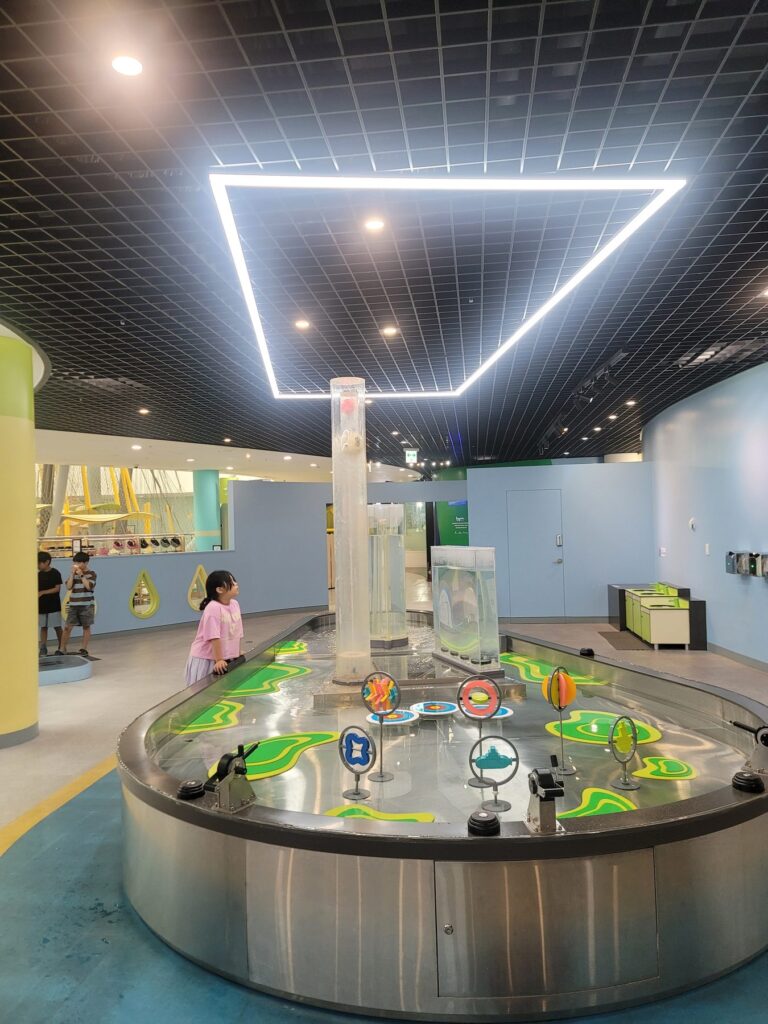
Mulbit Maeul (Water Village) was the first stop and the hardest to leave. It is a long water channel with wheels, screws, gates and dams that children operate themselves to see how water moves. She was soaked to the elbows within ten minutes. Pack a spare top.
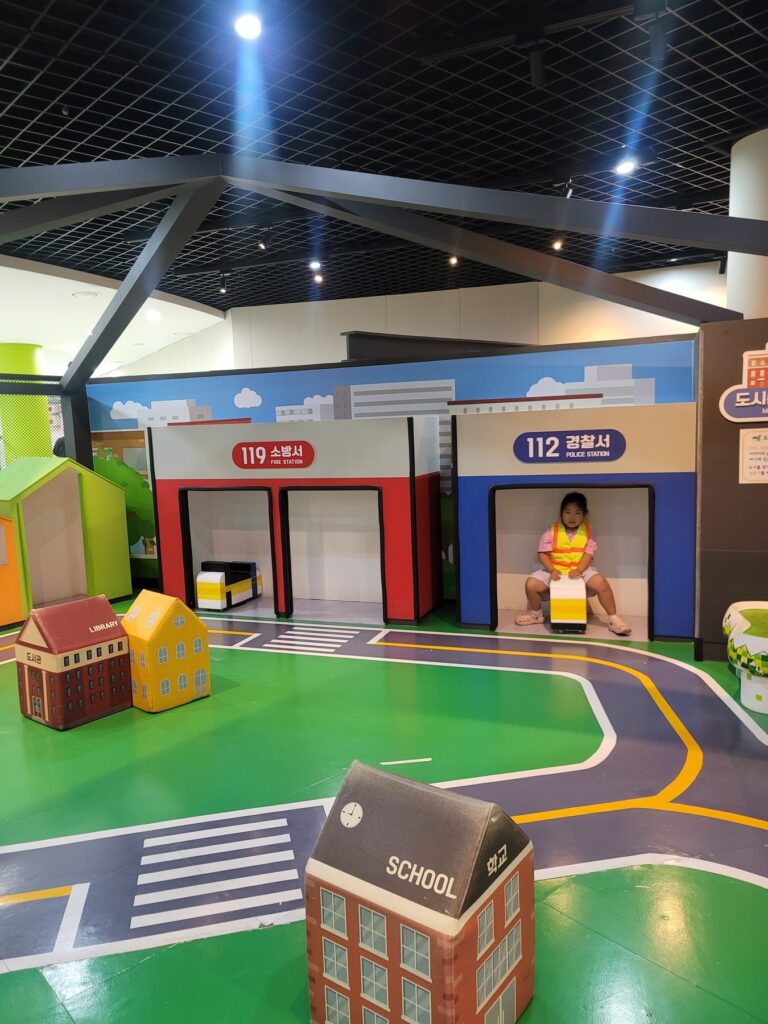
The role-play streets came next — a miniature town with a 119 fire station and a 112 police station, high-vis vests to put on, and soft-block buildings to rearrange. Those two numbers are Korea’s emergency lines, which makes this quietly useful for a visiting family as well as fun.
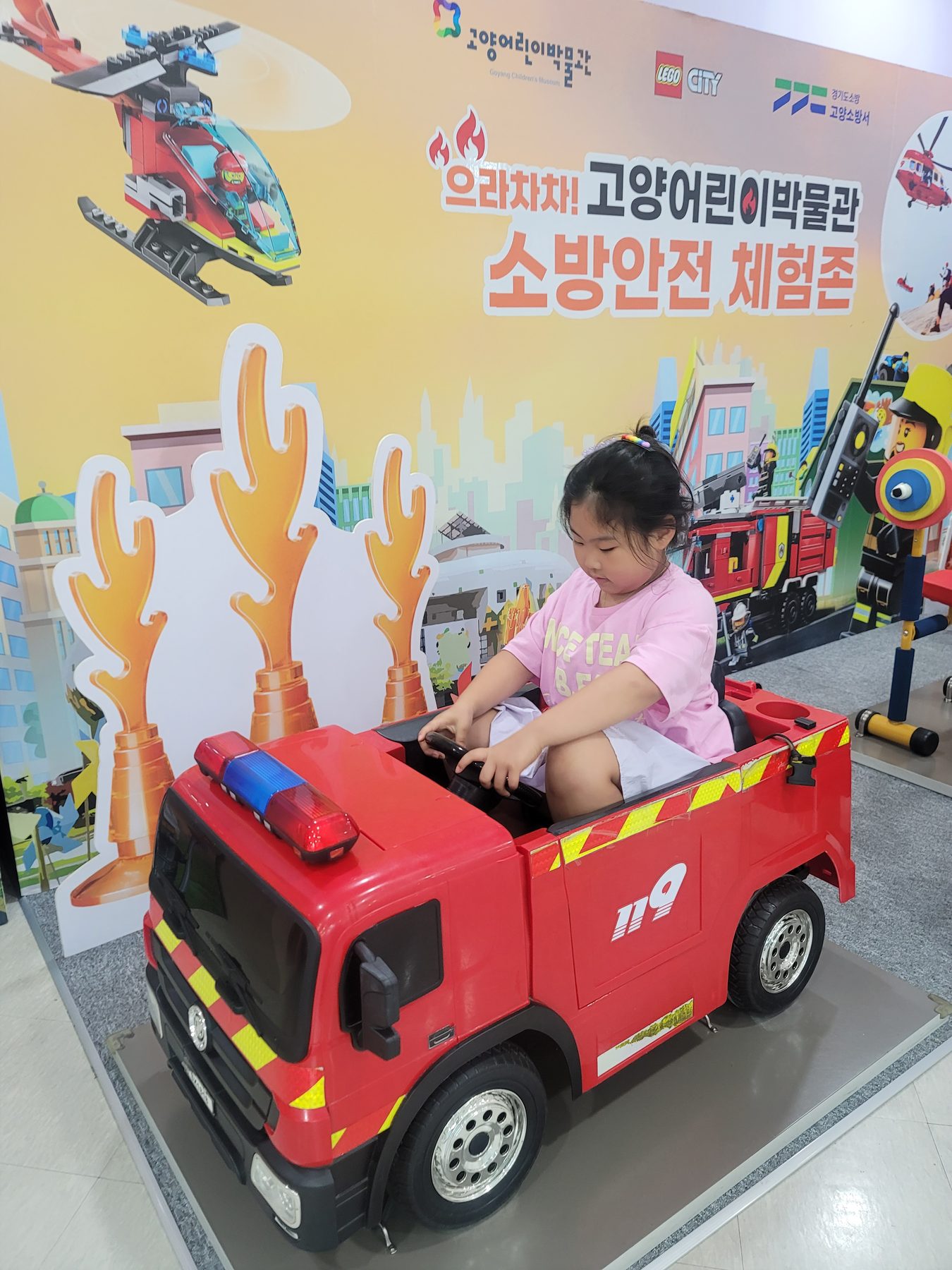
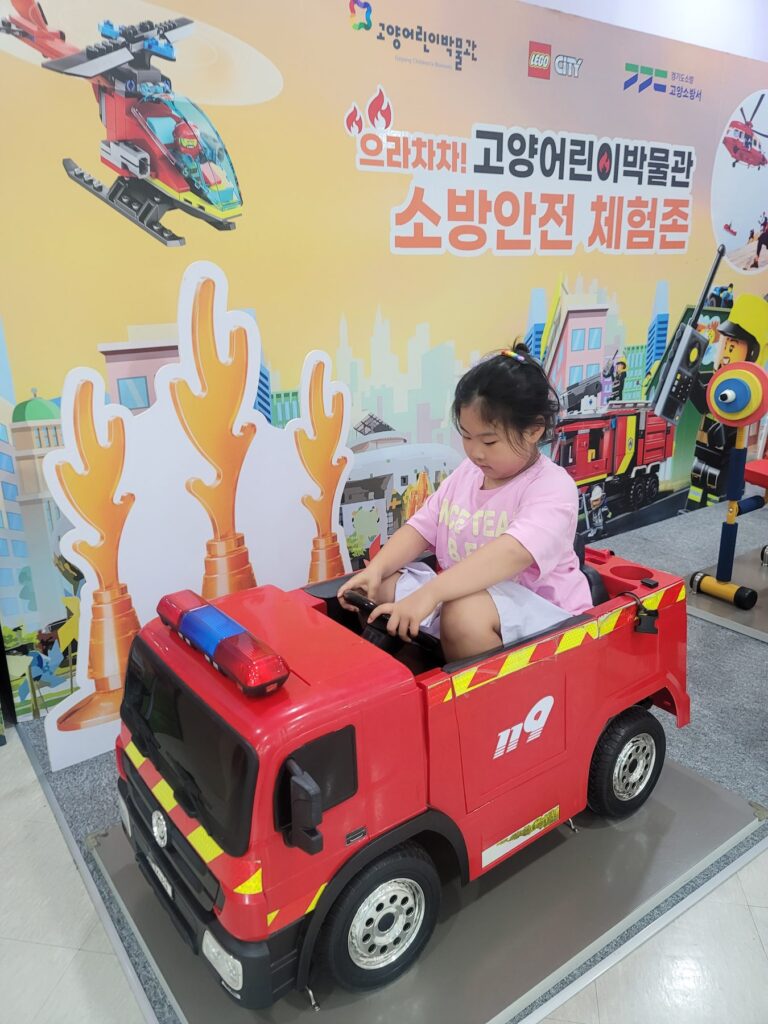
When we visited there was also a fire safety experience zone running with the local fire service, complete with a ride-on fire engine. Special activities like this rotate through, so check the museum’s notice board when you book — you may get something completely different.
The making areas, and the quiet corners
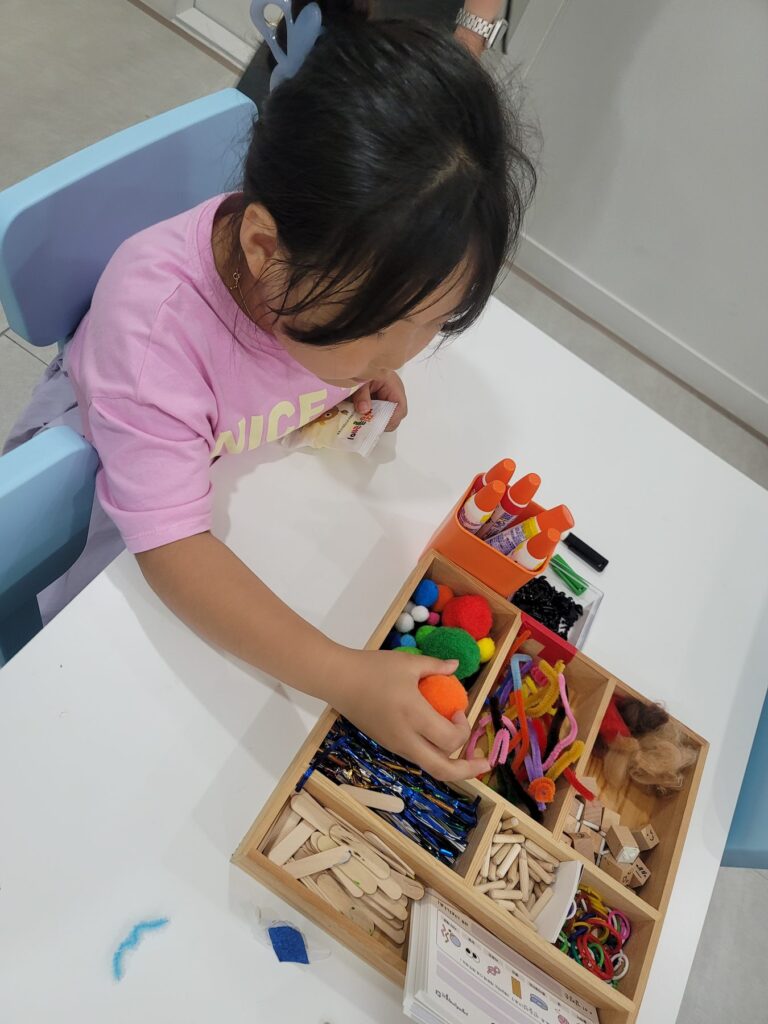
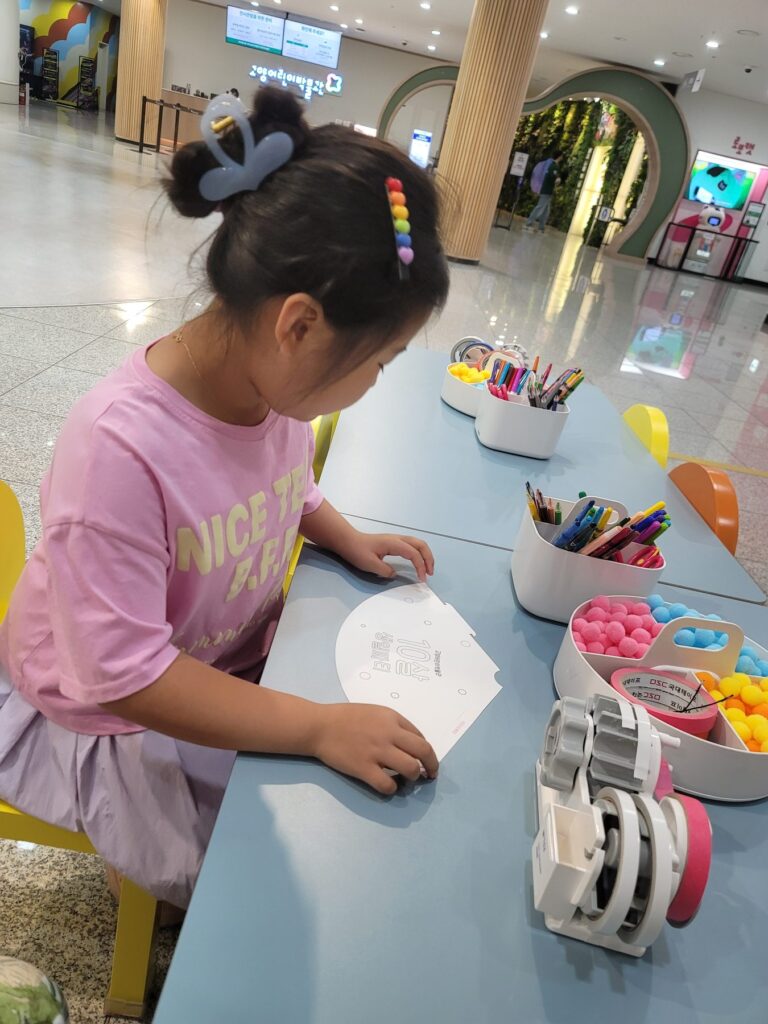
The making areas are where we lost the most time. Open trays of pom-poms, pipe cleaners, lolly sticks, wool and tape, a table, and no instructions. Nobody tells a child what to build.
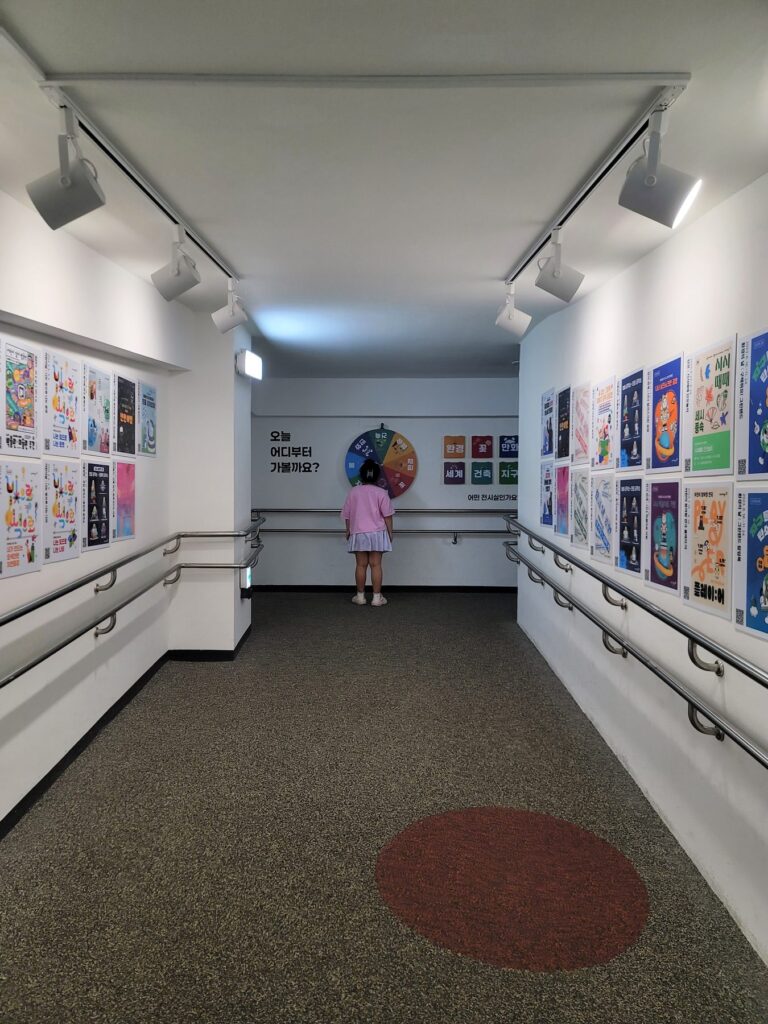
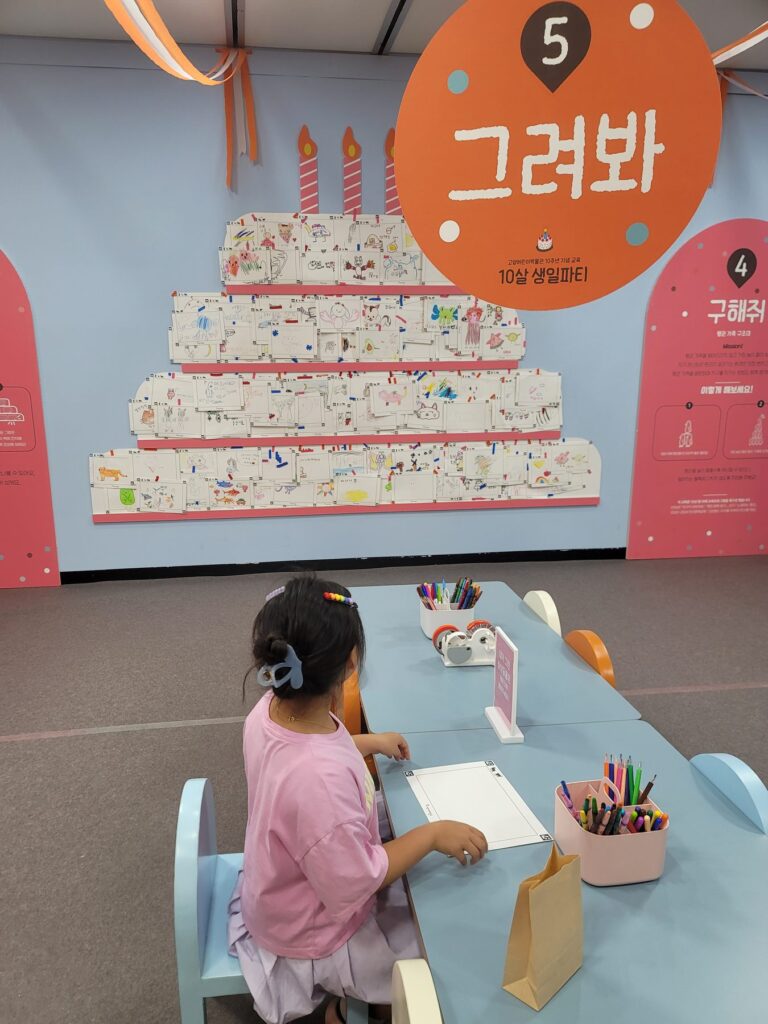
The museum turned ten in 2026, and during our visit a numbered anniversary trail ran through the building — draw a picture and pin it to a giant paper birthday cake, fold a paper boat and sail it in the water hall, plant a seed in a pot to take home, write a letter to your future self. Our daughter did every station. Again, this is a special programme rather than a permanent fixture, but it is a good sign of how much the museum runs beyond the standing exhibits.
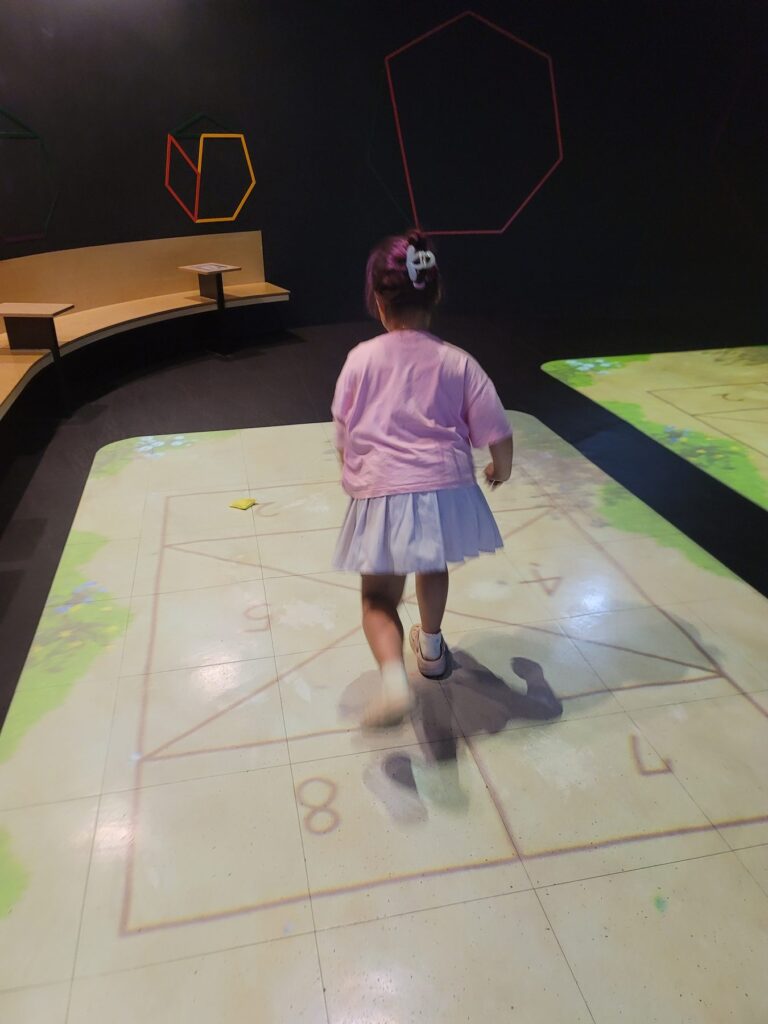
There are also quieter corners when it all gets too much — a darkened room with a projected light floor to walk across, a reading attic, and a sensory space for babies under 36 months so younger siblings are not just watching.
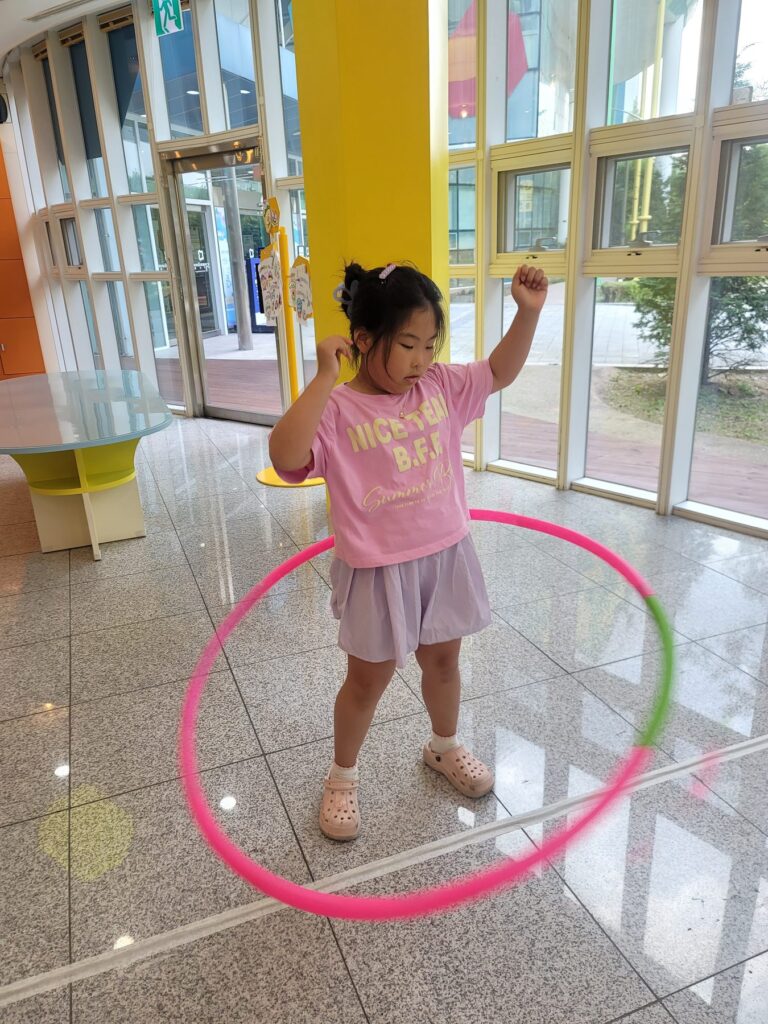
And the lobby itself is free to play in, with craft tables and hoops. If you arrive before your session starts, nobody is standing about waiting.
The exhibition halls, floor by floor
- 1F — Wonderful Land: the Janghang wetlands of Goyang, Korea’s 24th Ramsar-listed wetland, explored through an AR app and a digital forest.
- 2F — Mulbit Maeul (Water Village): the water play hall.
- 2F — Chorokbit Sesang (Green World): the environment, and what children can do about it.
- 2F — Hamkke Saneun Sesang (Living Together): Mongolian nomadic life and culture, with things to step into and try on.
- 2F — Kkothyanggi Maeul (Flower Village): how plants grow and what they need.
- 2F — Aigeuru: a climbing structure for physical play.
- 2F — Gureum Darak (Cloud Attic): a quiet attic with traditional Korean games reimagined, plus books tied to the exhibits.
- 2F — Aegi Sanchaek (Baby Walk): sensory play for under-36-months only.
The third floor
Upstairs the rooms get louder and more physical. Therefore we save this floor for last, once everyone has warmed up.
- 3F — Geonchuk Nolteo (Architecture Playground): building and construction at child scale.
- 3F — Ani Factory: how animation works, learned by making some.
- 3F — Yesul Nolteo (Art Playground): work by four contemporary artist teams, made to be responded to rather than just viewed.
Book Goyang Children’s Museum online first — the part people miss
The museum runs a fully pre-booked, timed-session system. On a busy day you cannot simply turn up and buy a ticket at the door.
How the sessions work:
- Session 1: 10:00 – 13:30
- Cleaning break: 13:30 – 14:00
- Session 2: 14:00 – 17:30
Each session holds 750 visitors and you can come and go freely within your own session — handy for a lunch break outside.
When booking opens: individual visitors can book from 10:00 on the 20th of each month, for the following month. Weekend and holiday sessions go first. The museum homepage shows a live counter for each session on each date, and it flips to 마감 (sold out) once a session fills — on the day we checked, the morning session was already sold out while the afternoon still had places.
How to book: through the museum website. You need to create an account and pay by credit card. The site is in Korean only, so plan to use your browser’s translate function. There is an on-site booking desk on the 1st floor from 09:00 to 16:30 kept specifically for people who cannot use the online system — foreign visitors included — but only if seats remain, so check the counter on the homepage before you travel out.
On the day: take your booking number or mobile barcode to the 1st floor desk and swap it for a paper ticket. If you are claiming a free or discounted rate, bring the documents — proof of age for the under-36-months exemption, for example. Anyone under 18 must be with an adult.
Cancellations: allowed up to 30 minutes before your session starts.
Who gets in free or cheaper
- Under 36 months: free (bring proof of age)
- Age 65 and over: free (ID required)
- Goyang residents: 30% off — bring ID or a residence document. Note that a resident parent’s ID does not extend the discount to their children; bring the child’s own residence document.
- Groups of 20 or more: 30% off
Practical notes
- Closed: every Monday, 1 January, and Lunar New Year’s Day and Chuseok Day. If a Monday falls on a public holiday, the museum closes the Tuesday instead.
- Getting there: Hwajeong Station (Line 3), Exit 2, 10 minutes on foot. From Daegok Station (Line 3 / GTX-A / Gyeongui-Jungang / Seohae), Exit 2, about 10 minutes by bus or taxi.
- Parking: 07:00–22:00. Exhibition ticket holders pay 1,000 won for the first three hours — show your ticket when you pay. The car park is small and fills up at weekends, and the museum itself recommends public transport.
- Bring: a spare set of clothes for the water hall, and socks.
- Address: 26 Hwajung-ro, Deogyang-gu, Goyang-si, Gyeonggi-do
- Phone: 031-839-0300
- Official site: www.goyangcm.or.kr
Where Goyang Children’s Museum is
Hwajeong Station on Subway Line 3 is a ten-minute walk away, and Line 3 runs straight into central Seoul. Open in Google Maps.
Would we go back to Goyang Children’s Museum?
Yes — and we would book the morning the calendar opened. Five thousand won a head, a full half-day out of the weather, and a child who comes home genuinely tired: it is one of the best-value family days within reach of Seoul.
If the forecast is bad and you would rather stay inside the city, see our guide to rainy day activities in Seoul with kids or the free museums in Seoul for kids. And before you travel, our travel printables include a packing checklist — the spare-clothes reminder exists because of days like this one.
Opening hours, admission prices, booking rules and special programmes can change. Always check the official website before visiting.