A rainy day in Seoul with kids does not have to ruin the trip. The city is famously well prepared for bad weather — huge indoor spaces, underground shopping streets, and some of the best hands-on museums for children in Asia. Many of them sit directly above a subway station, so you can spend a full day out without ever opening an umbrella.
So here are six indoor activities our family actually turns to when the forecast looks grim, with practical notes on reservations, strollers, and what age each one suits best.
Quick tip before you start: several of Seoul’s best indoor spots for kids require online reservations and can sell out on rainy weekends — when every local family has the same idea. Book the reservation-only spots first, then build your day around them.
Six ideas for a rainy day in Seoul with kids
Each of the six below stays dry from the subway exit onward. Therefore you can decide over breakfast and still be inside by ten.
1. Children’s Museum at the National Museum of Korea
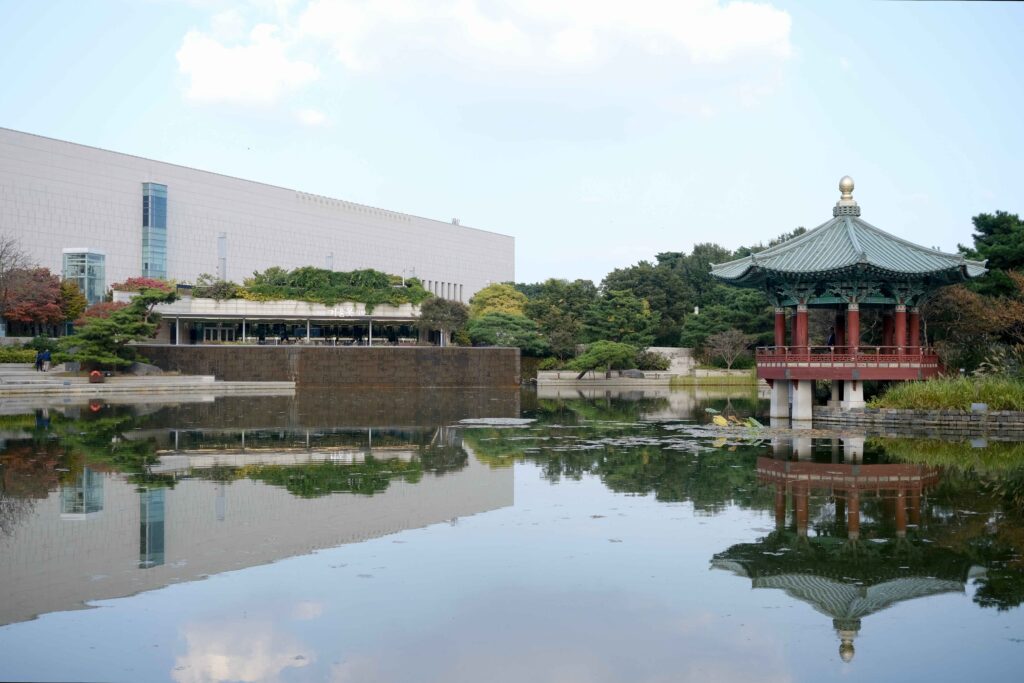
First, the National Museum of Korea in Yongsan has a dedicated Children’s Museum, and it may be the best free rainy-day option in the city. Kids explore Korean history through hands-on, play-based exhibits designed for small hands — building, touching, and role-playing rather than reading labels.
The catch: admission is free, but you must reserve online and the museum sells no on-site ticketing. Sessions run to a timetable, and adults cannot enter without a child. Book your slot on the official website before you go — ideally a few days ahead for weekends.
While you’re there, the main museum building is also stroller-friendly, with wide halls, elevators, cafes, and plenty of space for toddlers to move on a wet day.
- Best for: ages 3–9
- Cost: free (reservation required)
- Subway: Ichon Station (Line 4 / Gyeongui-Jungang Line), connected by an underground passage — you barely get wet
- Official site: https://www.museum.go.kr/ENG/
2. Seoul Children’s Museum (Children’s Grand Park)
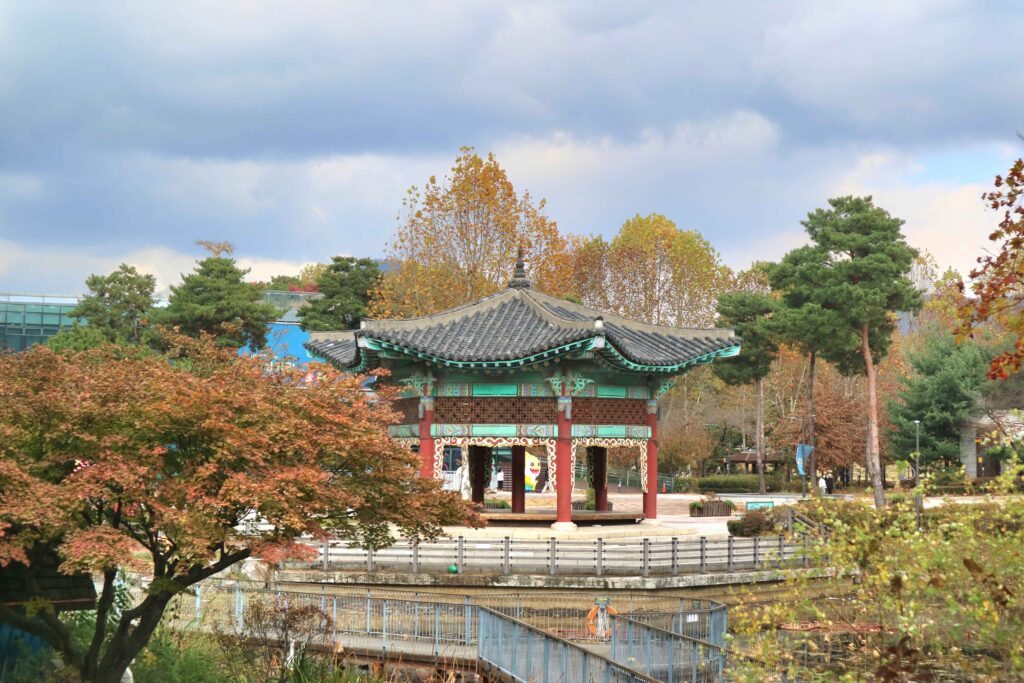
Meanwhile, next to Children’s Grand Park in eastern Seoul, this multi-floor museum is built entirely around hands-on play — water play, climbing structures, science experiments, and art spaces. It’s the kind of place where three hours disappear quickly.
Admission is 4,000 won for everyone over 36 months (under 36 months free). Part of the daily tickets are sold as online reservations and the rest on site first-come, first-served, so on rainy weekends it’s safer to reserve ahead. Your ticket also allows same-day re-entry, which makes it easy to pop out for lunch and come back. There’s stroller storage at the ticket office and nursing rooms inside. Closed Mondays.
- Best for: ages 2–9
- Cost: 4,000 won per person over 36 months
- Subway: Children’s Grand Park Station (Line 7)
- Official site: https://www.seoulchildrensmuseum.org/eng/
3. Lotte World Adventure (Indoor Theme Park)
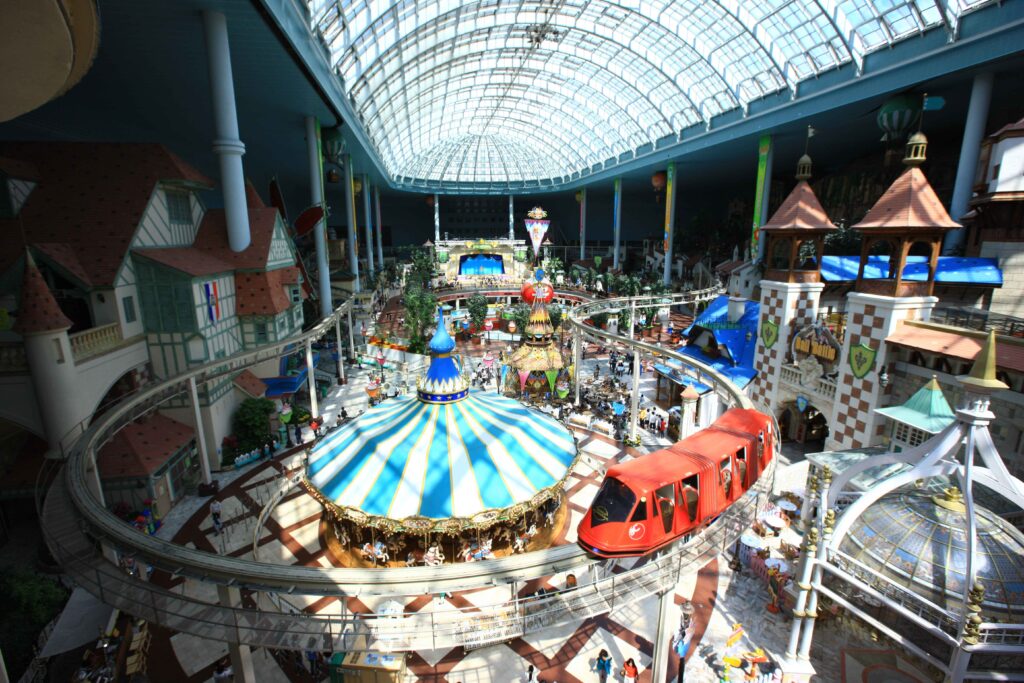
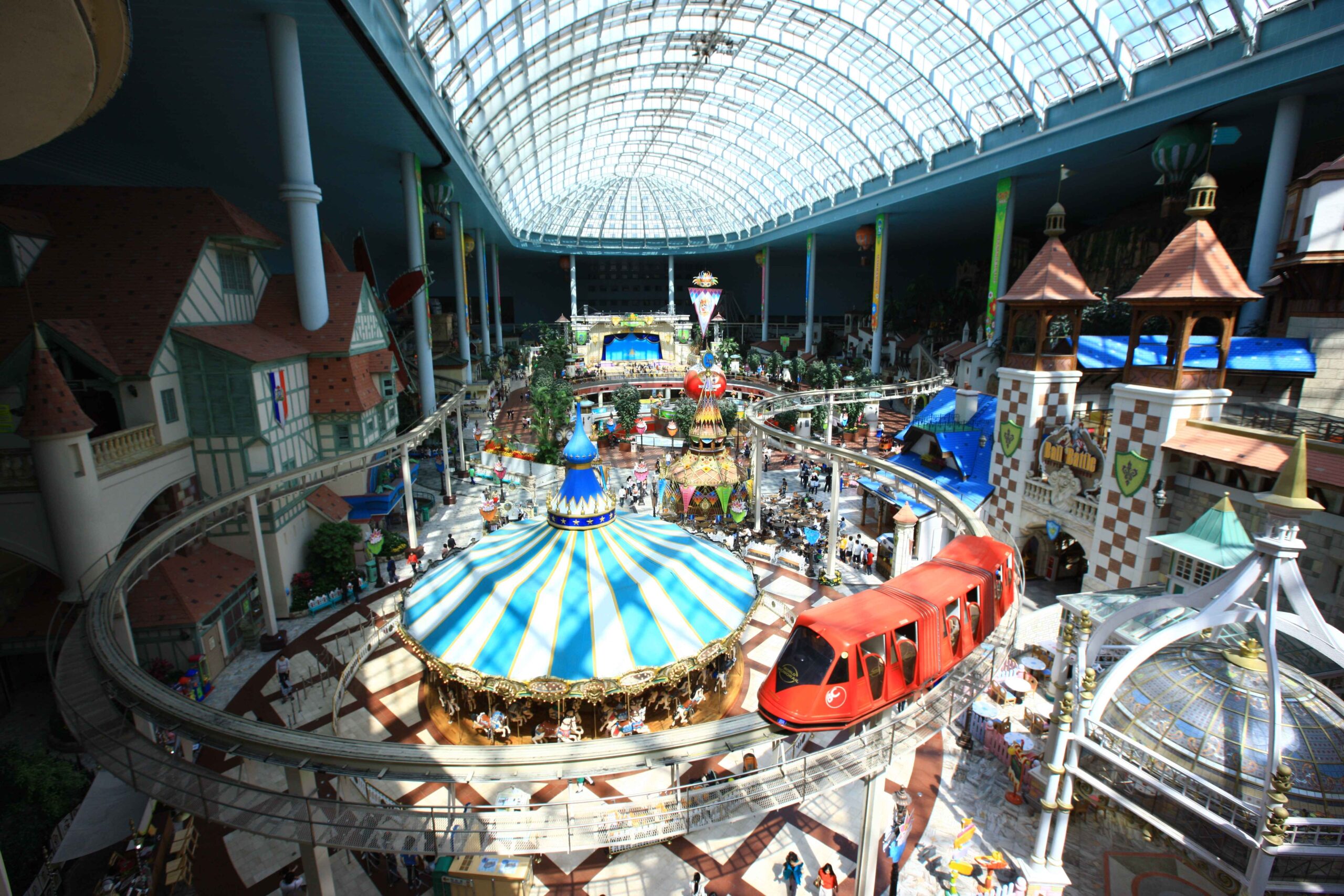
Lotte World in Jamsil is one of the world’s largest indoor theme parks — a full amusement park under a glass roof, with rides, parades, and an ice rink, plus a folk museum inside the same complex. On a rainy day it’s busy, but it’s also the only place in Seoul where your kids can ride a carousel and watch a parade while it pours outside.
However, ticket prices change by season and there are frequent discounts for afternoon entry, so check the official site or major booking platforms before paying the gate price. The connected Lotte World Mall and Aquarium mean you can easily fill an entire day in the same building complex.
- Best for: ages 4 and up (height limits apply on bigger rides)
- Cost: paid admission — check current prices online before you go
- Subway: Jamsil Station (Lines 2 & 8), directly connected underground
- Official site: https://adventure.lotteworld.com/eng/
4. COEX: a rainy day in Seoul with kids, all under one roof
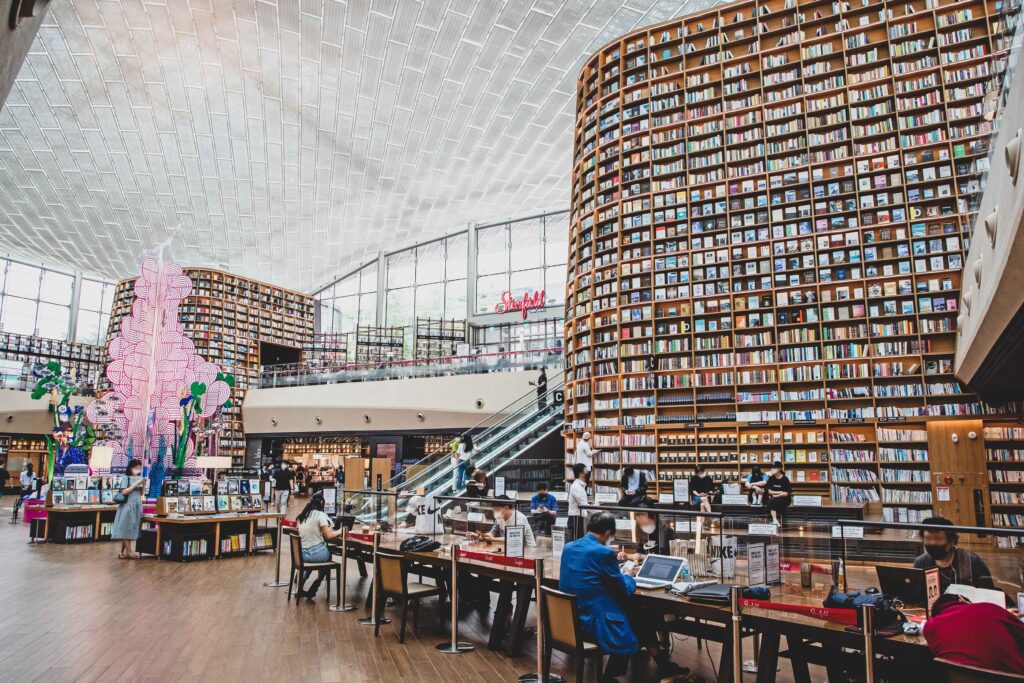
The COEX complex in Gangnam solves a rainy day in a single subway stop. Start at the Starfield Library — the famous free public library with towering bookshelves. In practice it works as a photo-and-browse stop rather than a quiet reading spot, but kids enjoy the scale of it and there are children’s books on the lower shelves.
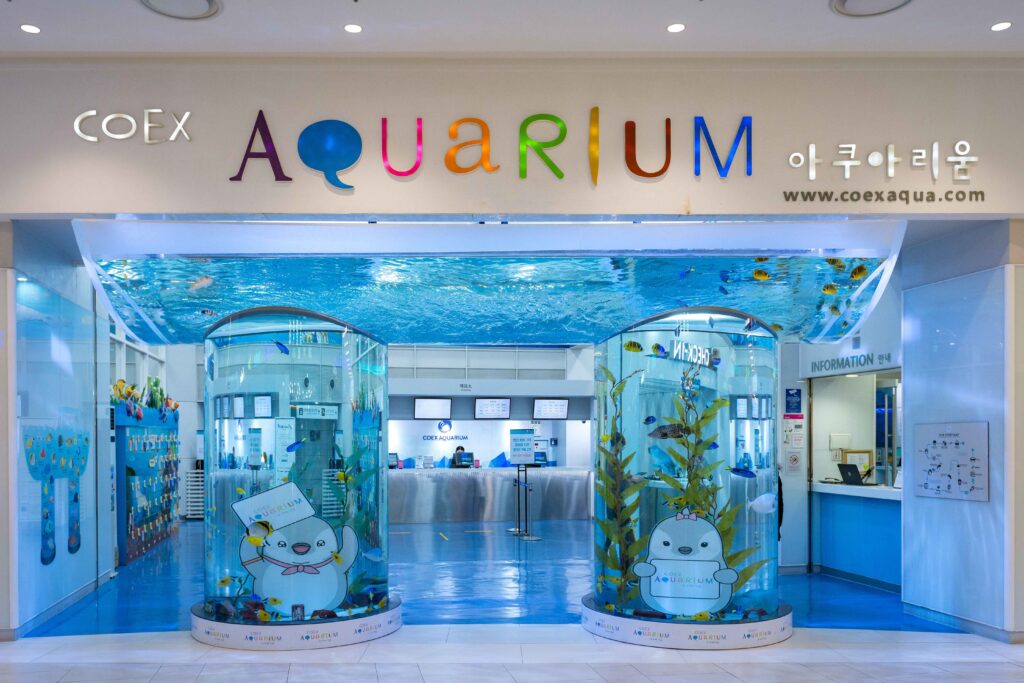
Then walk (indoors) to the COEX Aquarium, home to sharks, penguins, and long underwater tunnels that fascinate toddlers and older kids alike. Add the food court and the mall’s wide corridors, and you have a full stroller-friendly afternoon without stepping outside.
- Best for: all ages (library free; aquarium best value for ages 2+)
- Cost: library free; aquarium paid — check current prices online
- Subway: Samseong Station (Line 2), directly connected
- Official site: https://www.coexaqua.com/
5. Try a Korean Kids Cafe (키즈카페)
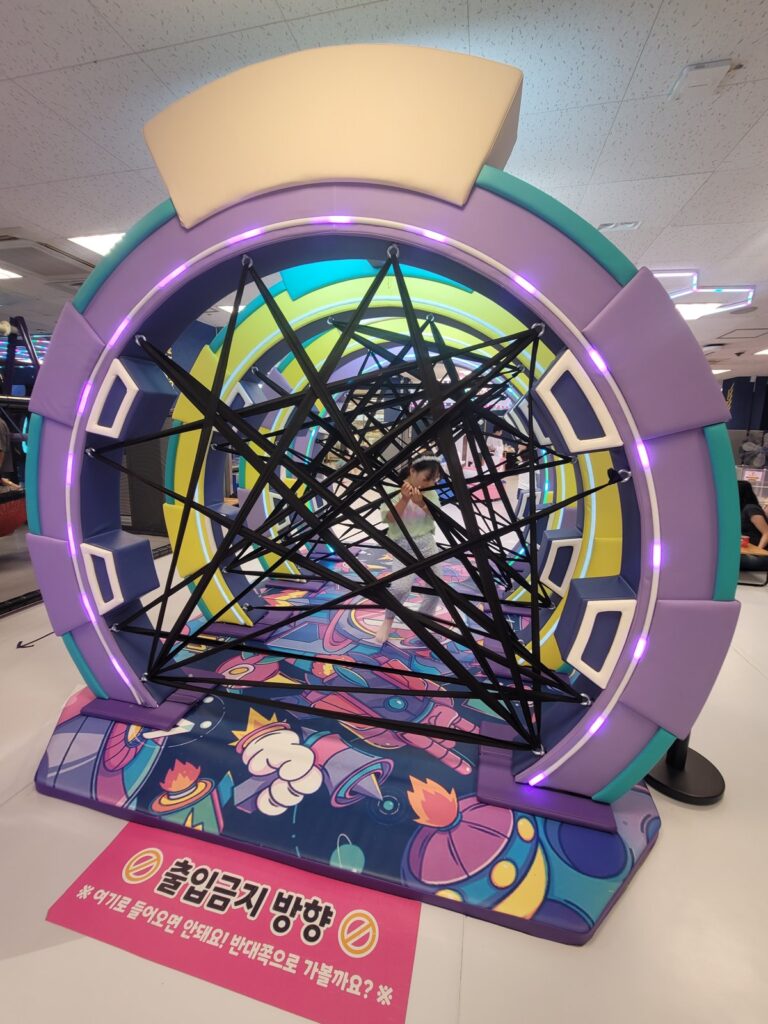
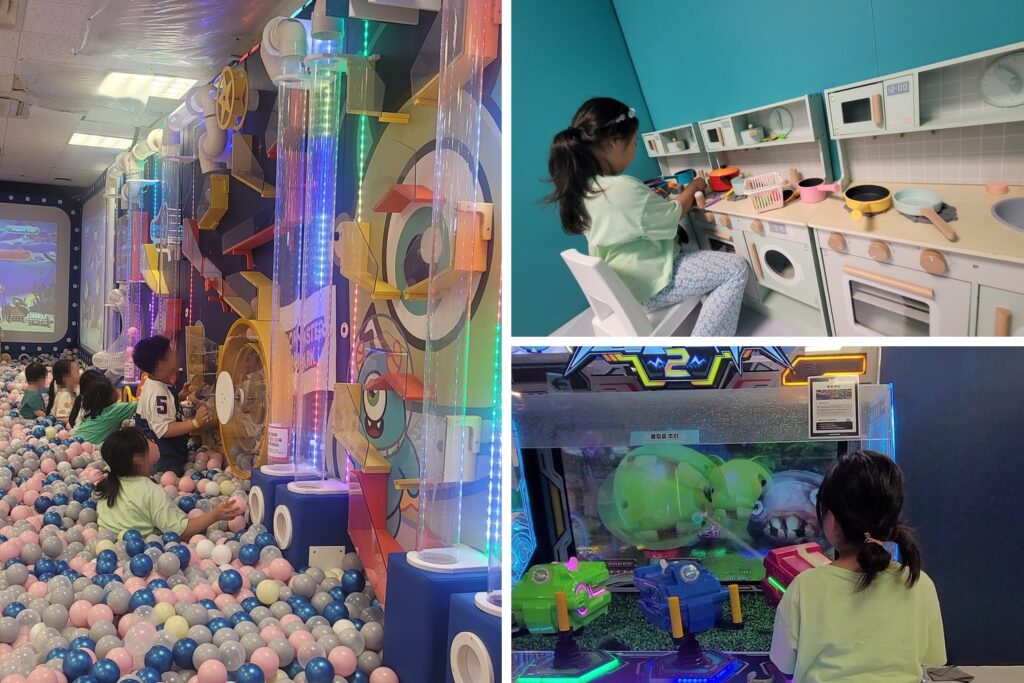
If you only take one “local parenting culture” tip from this site, make it this: Korea’s kids cafes. These are large indoor play centers — climbing structures, ball pits, trampolines, toy kitchens, sometimes mini zip lines — with a cafe area where parents sit with a coffee while children play in view.
Also, they exist in nearly every neighborhood, often inside shopping malls, so you can usually find one near your hotel by searching “키즈카페” or “kids cafe” on Naver Map or Google Maps. Expect to pay an entry fee per child (commonly around 10,000–20,000 won for a time block, varying by facility), with adult entry cheap or free. Everyone must wear socks, and most locations sell them if you forget.
For visiting families, therefore, this is often the single best rainy-day value in Seoul: the kids burn energy for two hours, and the parents actually get to sit down.
One kids cafe we actually use
One example our family actually uses: Monster Park (Susaek branch), on the 4th floor of E-mart Susaek in Eunpyeong-gu, western Seoul — a big indoor play park with climbing nets, slides, and a cafe zone for parents. It is a chain, so you will also find branches in Sindorim (Seoul), Incheon, Chuncheon, Changwon, and Busan.
- Best for: ages 1–8
- Cost: varies by facility; budget roughly the price of a nice lunch
- Where: everywhere — check major malls near your accommodation
- Example — Monster Park Susaek: E-mart Susaek 4F, 217 Susaek-ro, Eunpyeong-gu (a short walk from Susaek Station, Gyeongui-Jungang Line). Open 10:00–20:00; closed on the 2nd and 4th Sunday of each month. Parking is free for 4 hours — register your car at the info desk before you leave.
6. Underground Seoul: Shopping Streets and Jjimjilbang Culture
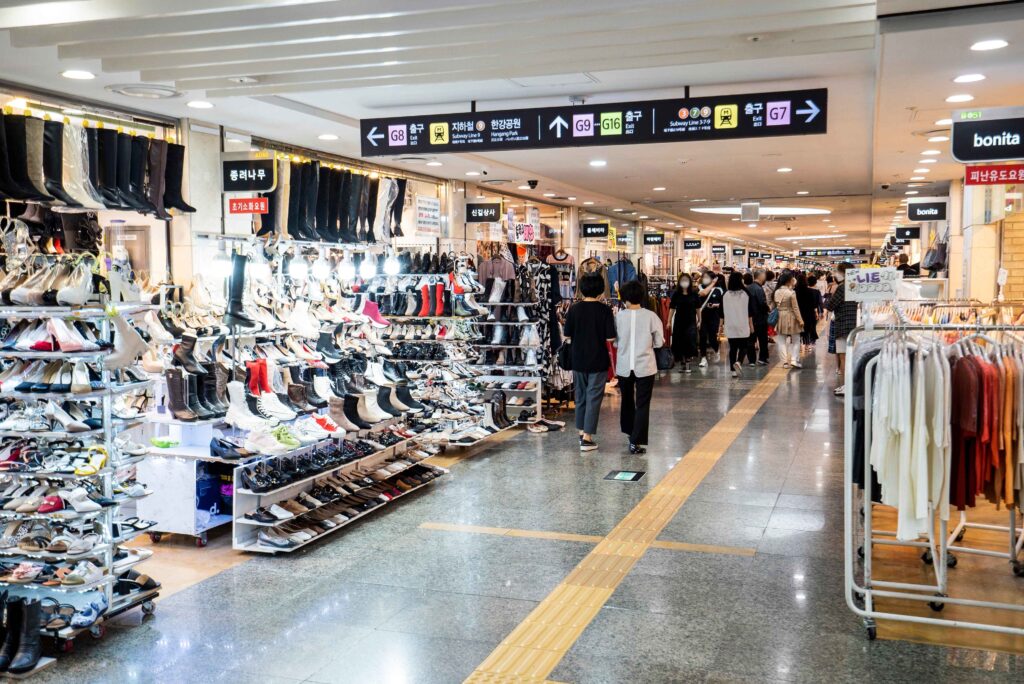
Finally, Seoul continues underground. Entire shopping streets run beneath the city — the Gangnam and Jamsil station underground malls, Express Bus Terminal’s Goto Mall — full of affordable clothes, snacks, and toy shops, all connected to subway lines. With a stroller and a rainy forecast, “underground Seoul” is a genuinely fun way to wander for an hour or two.
In addition, if your kids are a little older and adventurous, consider a family-friendly jjimjilbang (Korean spa) with communal lounge areas where families relax together in matching cotton uniforms, eat snacks, and try the famous sheep-head towel fold. Not every jjimjilbang suits young children, so look for ones that advertise family or kids zones and check age policies before you go.
- Best for: underground malls all ages; jjimjilbang best for ages 5+
- Cost: free to browse; jjimjilbang entry fees vary
- Subway: Express Bus Terminal Station (Lines 3, 7, 9) for Goto Mall
Planning tips for a rainy day in Seoul with kids
- Reserve first, then plan. The National Museum’s Children’s Museum takes online reservations only, and the Seoul Children’s Museum limits daily visitors. On rainy weekends, local families fill these fast.
- Use the subway connections. Every place on this list sits on a subway station, and most of them connect directly underground. Plan your day along one or two lines and you’ll stay almost completely dry.
- Pack socks. Kids cafes and jjimjilbangs require them, and they’re the item visiting families most often forget.
- Check official sites the day before. Hours, prices, and reservation rules change — links above go to official pages.
If the sky clears, see our guide to the 7 best parks in Seoul for kids, or keep the indoor theme going with these 7 free museums in Seoul for kids. And before your trip, grab our travel printables — the packing checklist includes a rainy-day section for exactly these days.
Opening hours, admission policies, and reservation rules can change. Always check the linked official website before visiting.