
Korea autumn festivals are the cheapest good day out this country offers a family. The humidity breaks some time in September, the evenings turn cool enough for a light jacket, and almost every city puts something on outdoors. Better still, most of them cost nothing at all.
One thing shapes the whole 2026 autumn calendar: Chuseok falls on Friday 25 September, with the holiday running Thursday 24 to Saturday 26 September. Some events were moved to avoid it, trains and motorways are packed either side of it, and a few of the best family festivals land right in the middle of it. Plan around that date first.
Here are five autumn 2026 festivals worth building a family trip around, with confirmed dates where they have been announced.
Five Korea autumn festivals worth planning around
Each one below is confirmed for 2026, and each works differently with children. Read the dates first, because two of them collide with Chuseok.
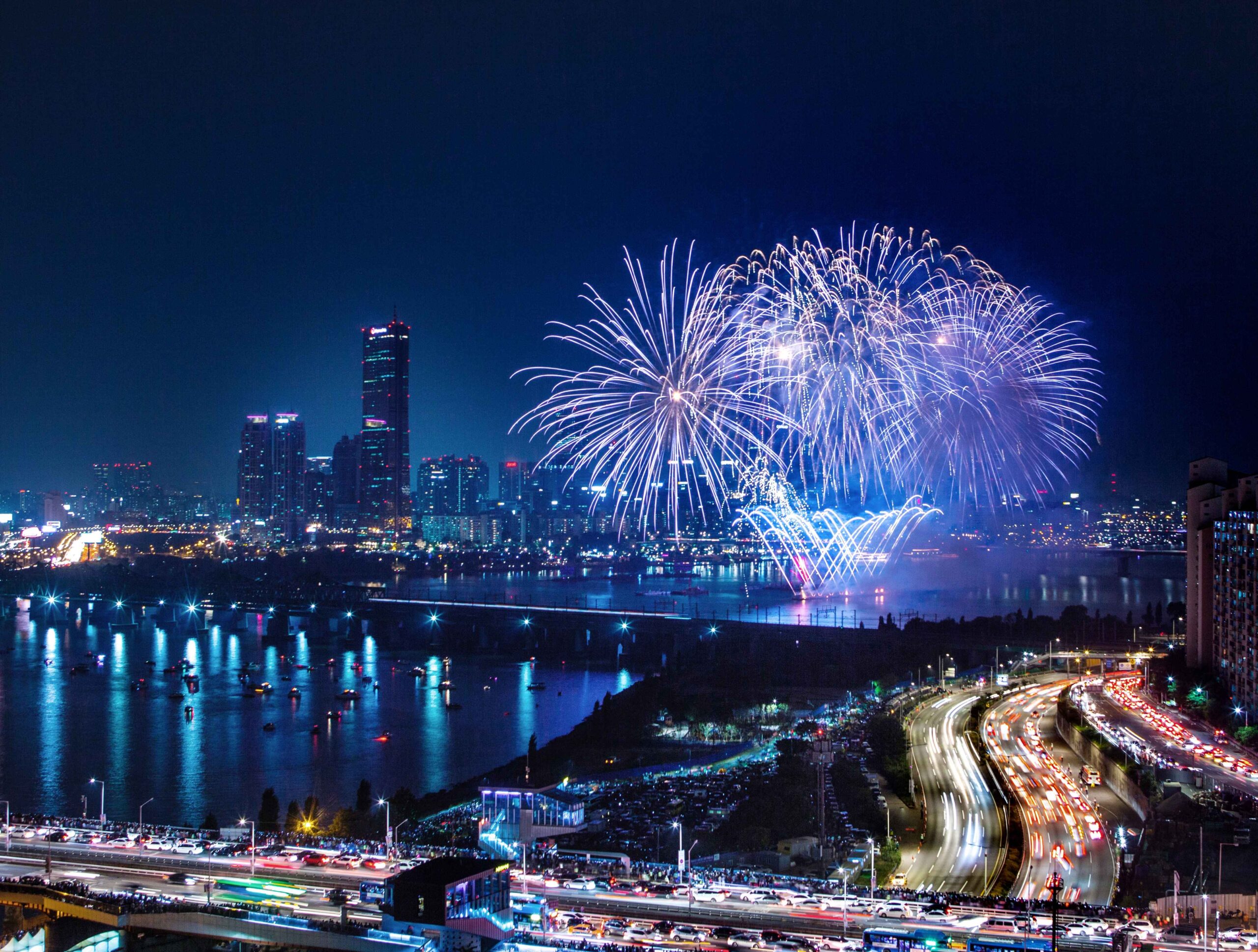
1. Seoul International Fireworks Festival — Saturday 5 September 2026
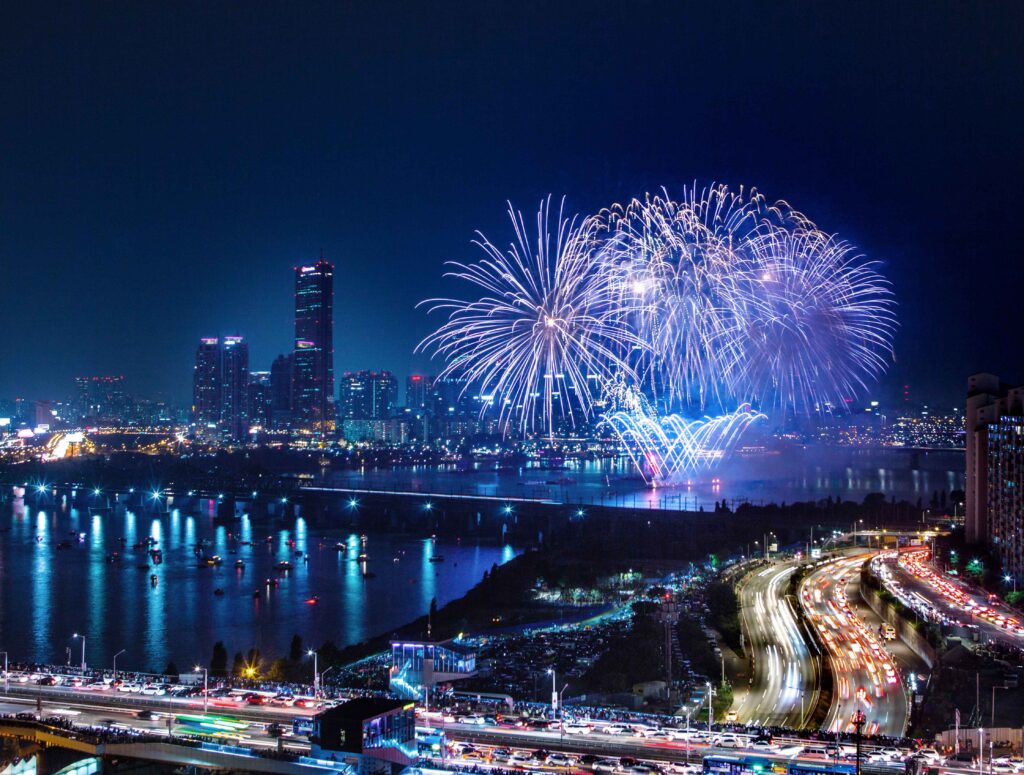
The biggest free night out in Seoul. Teams from several countries fire displays over the Han River near Yeouido, and roughly a million people come to watch from the riverbanks, the bridges and every rooftop with a sightline.
Watching from Yeouido Hangang Park and the surrounding riverside is free — you simply turn up, put a mat down and wait. Paid seating is sold separately at some venues; Nodeul Island, for example, runs a ticketed viewing event with zones priced from 110,000 to 220,000 won, where children under 36 months enter free with a guardian.
With children, plan for the crowd, not the fireworks. Arrive in the early afternoon to claim a spot, bring a mat, water and snacks, and accept that leaving will take one to two hours — subway stations near the river run one-way crowd control and fill completely. Many local families skip the main bank entirely and watch from further up the river, from a park on the opposite side, or from a high-floor restaurant. The bangs are genuinely loud, so it suits children from about age four; ear defenders are not a silly idea for toddlers.
- When: Saturday 5 September 2026
- Where: Han River at Yeouido, Seoul (Yeouinaru Station, Line 5) — Open in Google Maps
- Cost: free from the riverside; paid seating sold separately by venue
2. Chuseok — Thursday 24 to Saturday 26 September 2026

Chuseok is Korean Thanksgiving, and it is less a festival than a national pause. Families travel to their hometowns, share songpyeon rice cakes, and pay respects to ancestors. For a visiting family it can be the most interesting few days of the trip, or the most frustrating, depending on how you approach it.
The good part: palaces, folk villages and museums run special holiday programming — traditional games, hanbok photo sessions, crafts for children — and Seoul is unusually quiet and easy to move around, because a large share of the population has left the city. The four main palaces and the royal tombs are usually opened free of charge over the Chuseok holiday; the announcement comes a few weeks ahead, so check before you go rather than assuming.
The awkward part: many small restaurants and shops close for a day or two, and intercity trains and motorways are close to unusable on the first and last days of the holiday. If you need a KTX seat that week, book it the moment reservations open.
- When: Thursday 24 – Saturday 26 September 2026 (Chuseok day is Friday 25th)
- Where: nationwide; palaces and folk villages are the best bet with children — Gyeongbokgung on Google Maps
- Cost: most holiday programming is free or included with normal admission
3. Andong Mask Dance Festival — 24 September to 4 October 2026
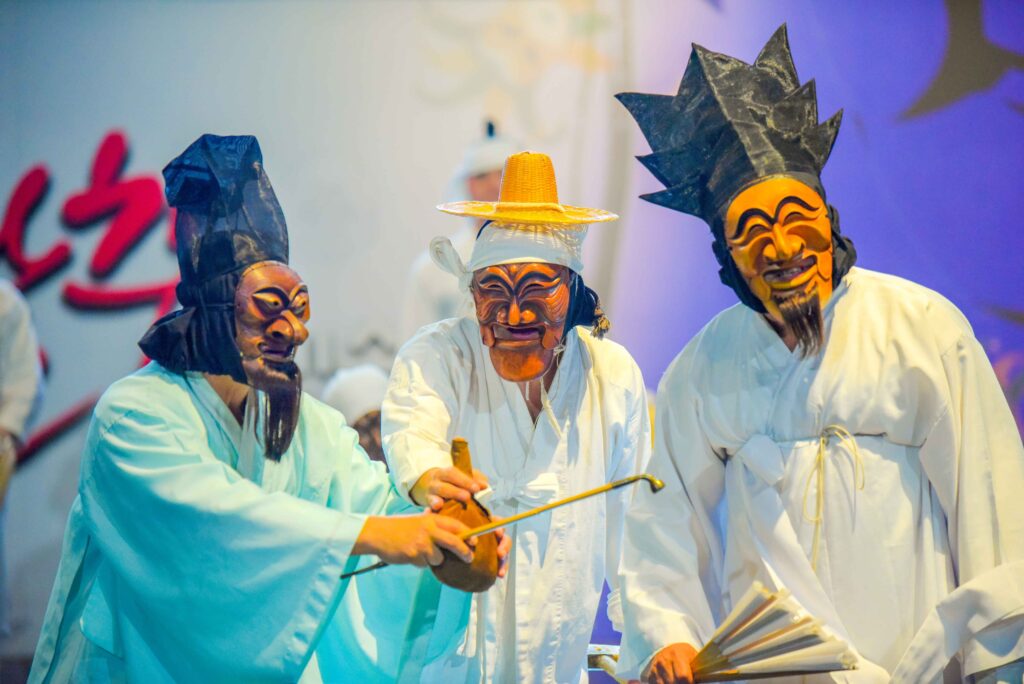
If you pick one traditional festival for children, pick this one. Andong’s mask dance tradition is UNESCO-listed, and the festival turns the whole town into a stage for eleven days: masked dance troupes from Korea and abroad, parades, mask-making workshops, and a genuinely welcoming attitude to children who want to join in rather than watch.
Tickets are 6,000 won for adults and 4,000 won for students when bought in advance, rising by 2,000 won each at the gate. Advance sales run until 17 September through Naver, KakaoTalk and Coupang. Buying ahead also comes with a 2,000-won coupon usable at the festival grounds and in the old town.
Events spread across the Mask Dance Park, the area around Andong Station, the old town centre and Hahoe Folk Village — itself a UNESCO World Heritage village and worth a half day on its own.
Note the overlap with Chuseok: the festival opens on the first day of the holiday. That is wonderful for atmosphere and difficult for transport, so lock in your KTX seats and accommodation early.
- When: 24 September – 4 October 2026
- Where: Andong, North Gyeongsang Province (about 2 hours by KTX from Seoul) — Open in Google Maps
- Cost: 6,000 won adult / 4,000 won student in advance; 2,000 won more at the gate
4. Jinju Namgang Yudeung Festival — 3 to 18 October 2026
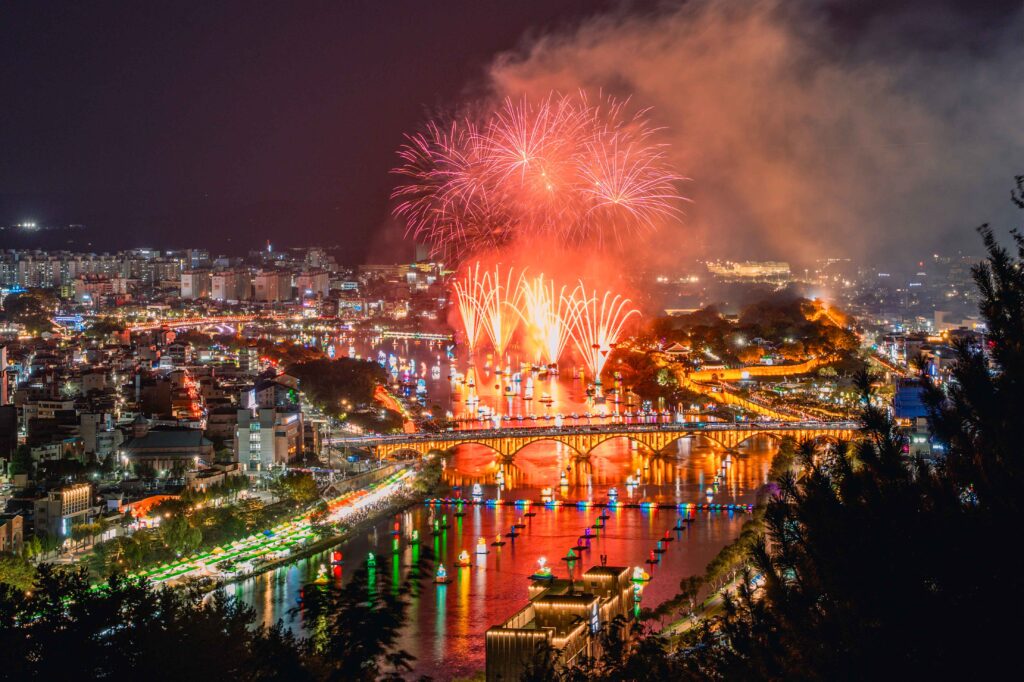
Thousands of illuminated lanterns floating down the Namgang River, strung across it, and lining the walls of Jinju Fortress. It began as a commemoration of a 16th-century siege in which floating lanterns were used for signalling, and it has become one of the most photographed festivals in the country.
For children the appeal is direct: you can write a wish on your own lantern and set it on the water, and there are lantern-lit bridges and tunnels to walk through. It runs after dark, so it is an evening outing rather than a full day — pack an extra layer, because riverside evenings in October get cold quickly.
The Gaecheon Arts Festival runs in Jinju from 9 to 18 October, overlapping the lantern festival, so the second half of the run is the busier and livelier stretch.
- When: 3 – 18 October 2026
- Where: Namgang River, Jinju, South Gyeongsang Province — Open in Google Maps
- Cost: check the official site — admission arrangements vary by year and by zone
5. Seoul Lantern Festival — winter, dates announced later in the year
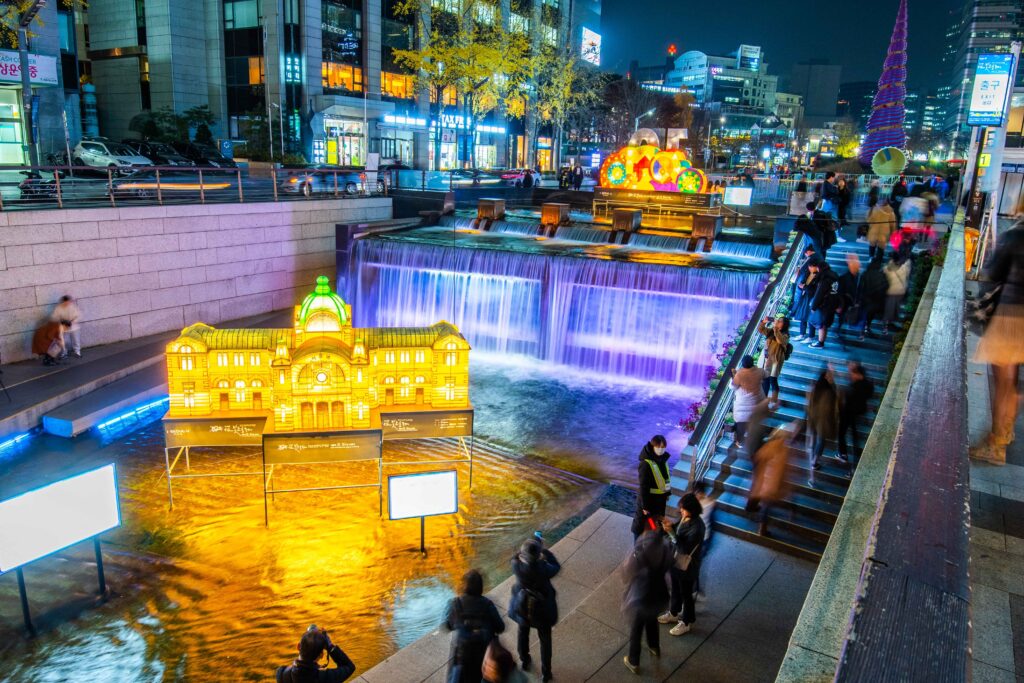
Seoul’s own lantern festival lights up the city centre in the coldest part of the year, with large illuminated sculptures along Cheonggyecheon Stream and around Gwanghwamun Square. It is free, it is entirely walkable, and it sits in the middle of Seoul, which makes it the easiest festival on this list to slot into a trip.
The 2026–27 dates had not been announced when this guide was written. It has typically run from around mid-December into early January, so if your trip falls in that window it is worth checking the city’s culture portal a few weeks ahead.
- When: winter 2026–27, dates to be announced
- Where: Cheonggyecheon Stream and Gwanghwamun Square, central Seoul — Open in Google Maps
- Cost: free
Planning notes for Korea autumn festivals
- Book around Chuseok first. KTX reservations for the holiday week open well in advance and sell out fast. If Andong or Jinju is on your list, sort transport before anything else.
- Evenings are colder than the forecast suggests. Three of these five are night events by a river. Bring a layer more than you think you need for the children.
- Strollers and festival crowds do not mix well. For the fireworks in particular, a carrier is easier than a pushchair once the riverside fills up.
- Korea autumn festivals change every year. Everything above is what had been confirmed at the time of writing; official sites are the final word.
- Free does not mean uncrowded. The free events on this list are the most crowded ones. Arriving two hours early is normal, not excessive.
Choosing between Korea autumn festivals
With children under six, pick the lanterns at Jinju or the Chuseok palace programming. Both stay calm and neither needs a long day. With older children, Andong is the one worth the KTX ticket, because they can join the dancing rather than watch it. The fireworks suit any age that copes with noise and crowds.
Planning the rest of the trip? See our guide to rainy day activities in Seoul with kids for the days the weather turns, the 7 best parks in Seoul for kids for the days it doesn’t, and our travel printables for a packing checklist before you fly.
Festival dates, ticket prices and admission rules change every year and are sometimes revised at short notice. Always check the official festival website before travelling.