
If you ask Korean parents where they go to escape the city with their kids, many will give you the same answer: a recreation forest (자연휴양림, jayeon huyangnim). These government-run forest retreats offer cabins, camping decks, and walking trails in some of Korea’s most beautiful mountains — often for less than the price of a budget hotel in Seoul. Yet almost no foreign visitors know they exist, partly because Korea recreation forest booking happens on a Korean-language government site where popular dates fill up within minutes.
This guide explains what recreation forests are, why Korean families love them, and which ones you can realistically visit from Seoul or Incheon — even without a car.
Quick Guide
| What | Details |
|---|---|
| What it is | Government-run forest retreats with cabins, camping decks, and trails |
| How many | 40+ national forests, plus 100+ run by provinces and cities |
| Price | Cabins usually cost noticeably less than a mid-range Seoul hotel; rates vary by forest, cabin size, and season |
| Official booking site | Foresttrip (숲나들e), run by the Korea Forest Service |
| When to book | Reservations open monthly for upcoming dates; weekends at popular forests sell out fast |
| Best for | Families who want a screen-free nature stay without resort prices |
What Is a Korean Recreation Forest?
Recreation forests were created to give city dwellers affordable access to nature. A typical forest has a cluster of wooden cabins (supsokui jip, “houses in the forest”), camping decks, gentle walking trails, and often a shallow stream or water play area that Korean kids adore in summer.
Unlike commercial resorts, everything is designed around simplicity: you cook your own meals in the cabin kitchen, quiet hours are enforced in the evening, and the main activity is simply being in the woods. For families, that’s exactly the appeal — it’s the kind of screen-free trip that’s hard to engineer anywhere else.
REQU Korea tip: Korean families book these cabins for summer vacation and fall foliage season months ahead. If your dates are July–August or late October, treat booking like concert tickets — and have a weekday backup.
Why They’re Hard to Book (and Why It’s Worth It)
The official reservation portal for national recreation forests is Foresttrip (숲나들e). Reservations open on a monthly cycle — each forest publishes its own schedule, and some popular ones also run a lottery for peak weekends. The catch for visitors: the site is in Korean, and the most-loved forests near Seoul can sell out almost immediately when a month opens.
The good news is threefold. Weekday nights are far easier to get than weekends. Cancellations flow back into the calendar, so checking a few days before your trip often works. And several genuinely good forests sit within reach of Seoul and Incheon by public transport — which is exactly where we suggest you start.
3 Recreation Forests You Can Reach from Seoul & Incheon
1. Surak Hyu (수락휴) — inside Seoul, no car needed
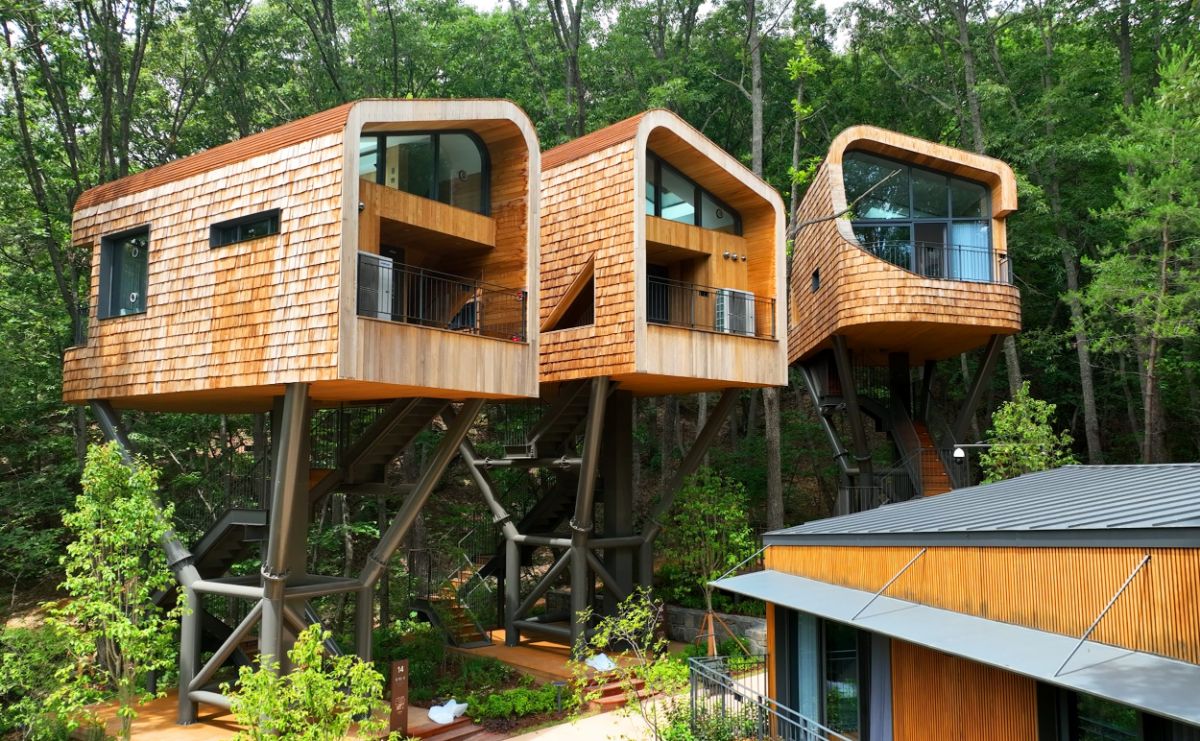
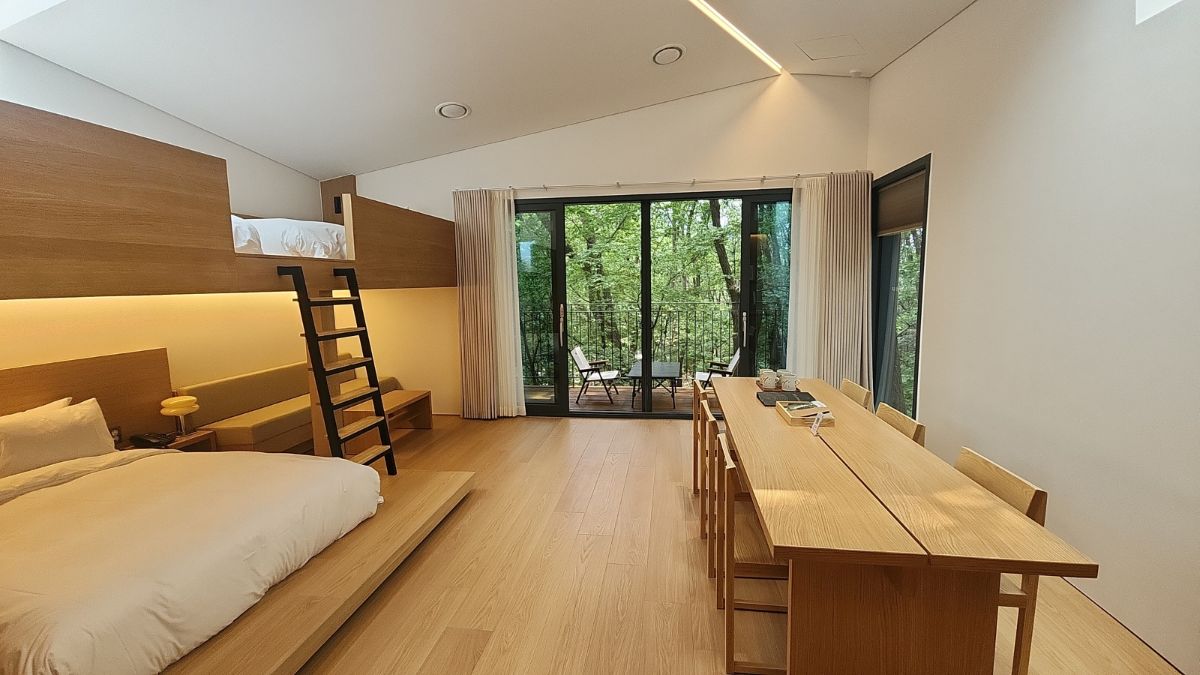
Seoul’s first city-run recreation forest opened in July 2025 on the slopes of Suraksan in Nowon-gu — and it even has treehouse cabins built 14 meters above the forest floor. With 25 rooms for two to six people, it books out quickly, but access is unbeatable: it sits about 1.6 km from Bulamsan Station on subway Line 4, close enough to walk or take a short local bus ride.
- Best for: families without a car, or a one-night forest stay inside a Seoul itinerary
- Getting there: Subway Line 4 to Bulamsan Station, then a 1.6 km walk or local bus
- Booking: Surak Hyu on Foresttrip — general reservations open from the 10th of each month
2. Muuido National Recreation Forest (무의도자연휴양림) — the island next to Incheon Airport
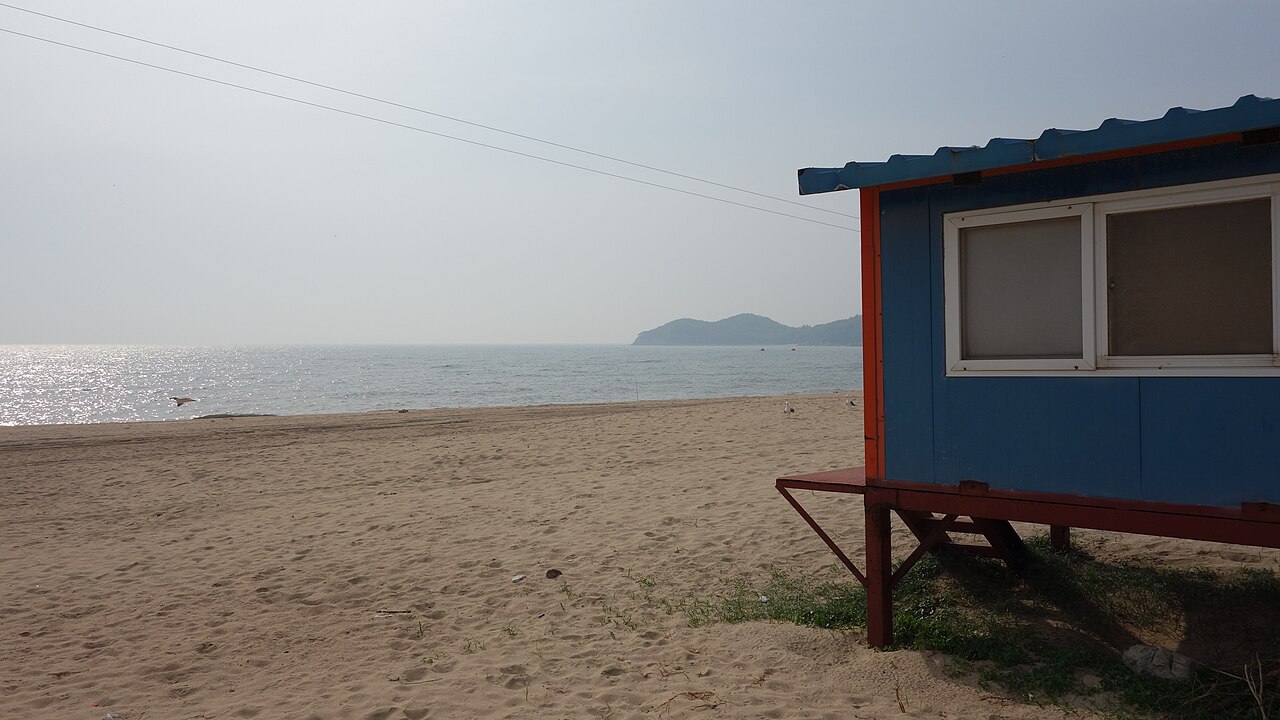

Here’s a secret almost no international traveler knows: there is a national recreation forest on the island right next to Incheon Airport. Muuido is connected by bridge (no ferry needed), and its forest sits above Hanagae Beach — famous for its wide tidal flats, mud play, and sunset views. One of the newest national forests in the system, it makes a brilliant first or last night of a Korea trip: land, sleep in a forest by the sea, and ease into the time zone before the city.
- Best for: the first or last night of your trip — it sits minutes from Incheon Airport by car
- Getting there: Short taxi ride or local bus from the Incheon Airport area, over the Muuido bridge
- Booking: Muuido on Foresttrip — first-come, first-served
3. Mubongsan Recreation Forest (무봉산자연휴양림) — brand-new cabins south of Seoul
Opened in late October 2023, Mubongsan in Hwaseong is one of the newest recreation forests in the capital region — ten fresh forest cabins from three-person to eleven-person sizes, plus camping decks, a forest playground, and picnic grounds. It sits about ten minutes from Dongtan new town: take the SRT high-speed train from Seoul’s Suseo Station to Dongtan (around 15 minutes), then a short taxi ride. Half the cabins are reserved for Hwaseong residents, so book the general slots the moment they open.
- Best for: families who want the newest facilities without going far from Seoul
- Getting there: SRT Suseo → Dongtan (~15 min), then a short taxi; or about an hour by car from southern Seoul
- Booking: Mubongsan on Foresttrip — opens on the 1st of each month at 9:00 a.m.
Step-by-Step: How to Book
- Pick your forest first. Decide by access and travel style — Surak Hyu for no-car simplicity, Muuido for airport-and-beach convenience, Mubongsan for the newest cabins.
- Create your Foresttrip account early. The site is in Korean, so set up your account with translation help well before opening day — don’t wait until reservations open.
- Know the opening date. Each forest lists its reservation-opening schedule on its Foresttrip page (Surak Hyu, for example, opens general booking from the 10th of each month). Log in a few minutes early.
- Have a plan B. Choose a backup forest or weekday date in advance — hesitating for a minute can cost you the slot.
- Watch for cancellations. Cancelled slots return to the calendar, and a check a few days before your trip is often a second chance.
REQU Korea tip: If the big-name forests are full, provincial and city-run forests are less known even among Koreans. We track opening schedules across systems at REQU, our Korean public-reservation calendar.
What to Bring and Expect
Cabins are self-catering: expect a kitchen, heating (many use Korea’s famous ondol heated floors), and simple furnishings — but check each forest’s page for what’s provided, as bedding and amenities vary. Bring your own food, since the nearest shop may be a long drive away, plus toiletries and indoor slippers. Check-in is typically mid-afternoon, and quiet hours are enforced in the evening.
FAQ
Can foreign visitors book a recreation forest?
The booking site is in Korean and the process is built around Korean accounts, which is the biggest hurdle for visitors. We’re preparing a detailed walkthrough for foreign families — in the meantime, booking with help from a Korean-speaking friend or host is the most reliable route.
How much does a cabin cost?
Generally well below a mid-range Seoul hotel, with weekday and off-season rates lower still. Exact prices vary by forest and cabin size — check the forest’s official Foresttrip page for your dates.
Do I need a car?
For most forests, a car helps — but not always. Surak Hyu is subway-accessible, and several forests can be reached by intercity bus plus a short taxi ride, which is why we recommend those to visitors first.
Is it suitable for toddlers?
Generally yes: trails are gentle, cabins are self-contained, and summer stream play is shallow. Just pack everything you’d need for a self-catering stay.
Plan More
Planning a longer family trip? See our guides to Seoul’s palaces with kids, the best parks in Seoul, and free museums kids actually enjoy.
Policies, prices, and schedules can change — always confirm details on the official site before booking.