Seoul transport with kids is the easiest part of travelling here. Trains run frequently, they stay clean and air-conditioned, every station has a lift, and a five-year-old rides for about the price of a stick of gum.
This is the practical guide we wish we had been handed on arrival: what children pay, which card to buy, how strollers actually work, and the small rules nobody writes down.
Seoul transport with kids: what children actually pay
Fares on the Seoul subway and city buses are age-banded, and the bands are generous.
- Under 6: free. A paying adult can take up to three children under six at no charge — just walk them through the wide gate with you.
- Ages 6–12 (child fare): 550 won with a transport card. That is roughly 40 US cents.
- Ages 13–18 (youth fare): 900 won with a transport card.
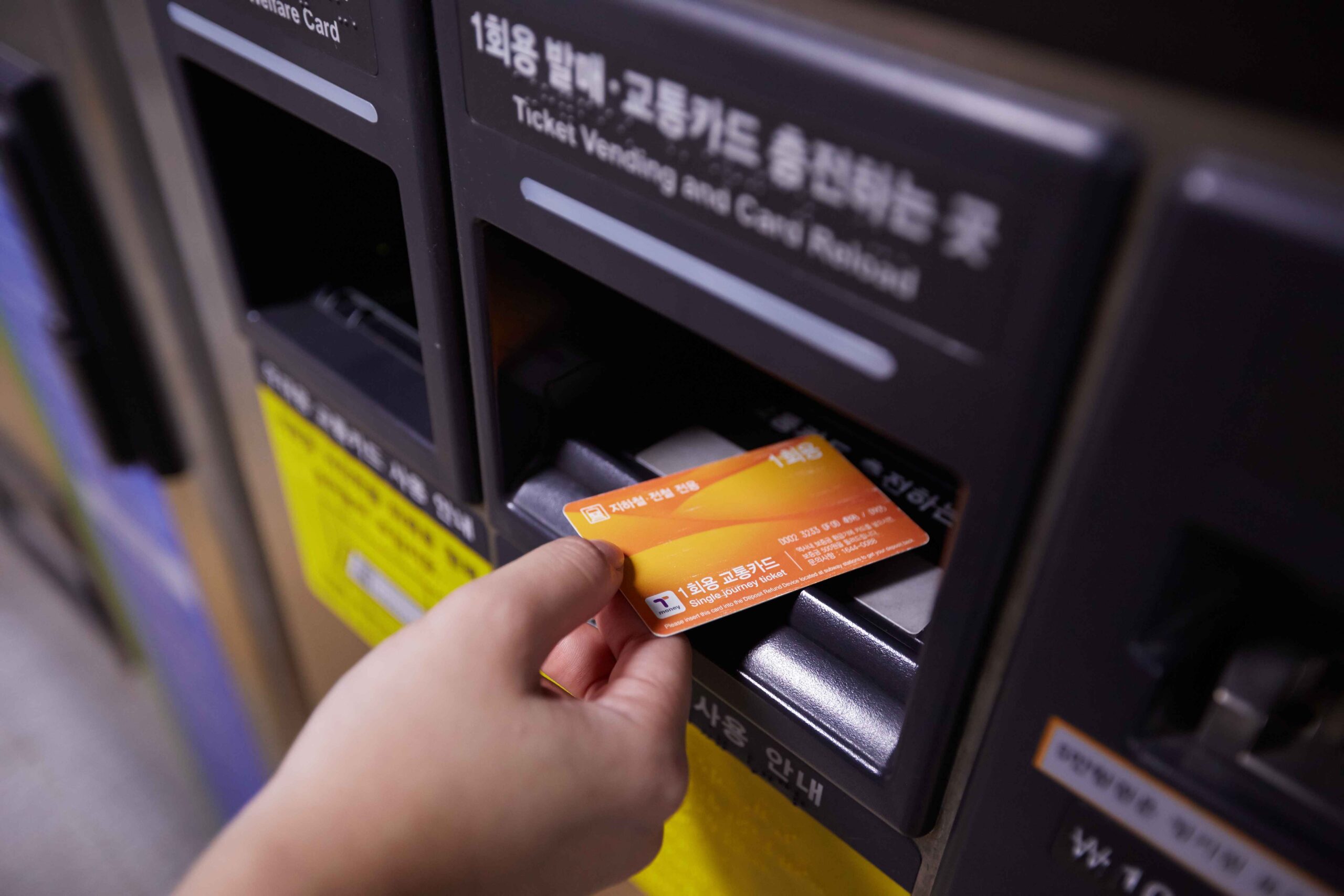
- Adults: 1,550 won with a transport card; a single-journey ticket costs 100 won more.
Those are base fares for the first 10 km, with small increments for longer trips. For most family days inside Seoul you are paying close to the base fare each way.
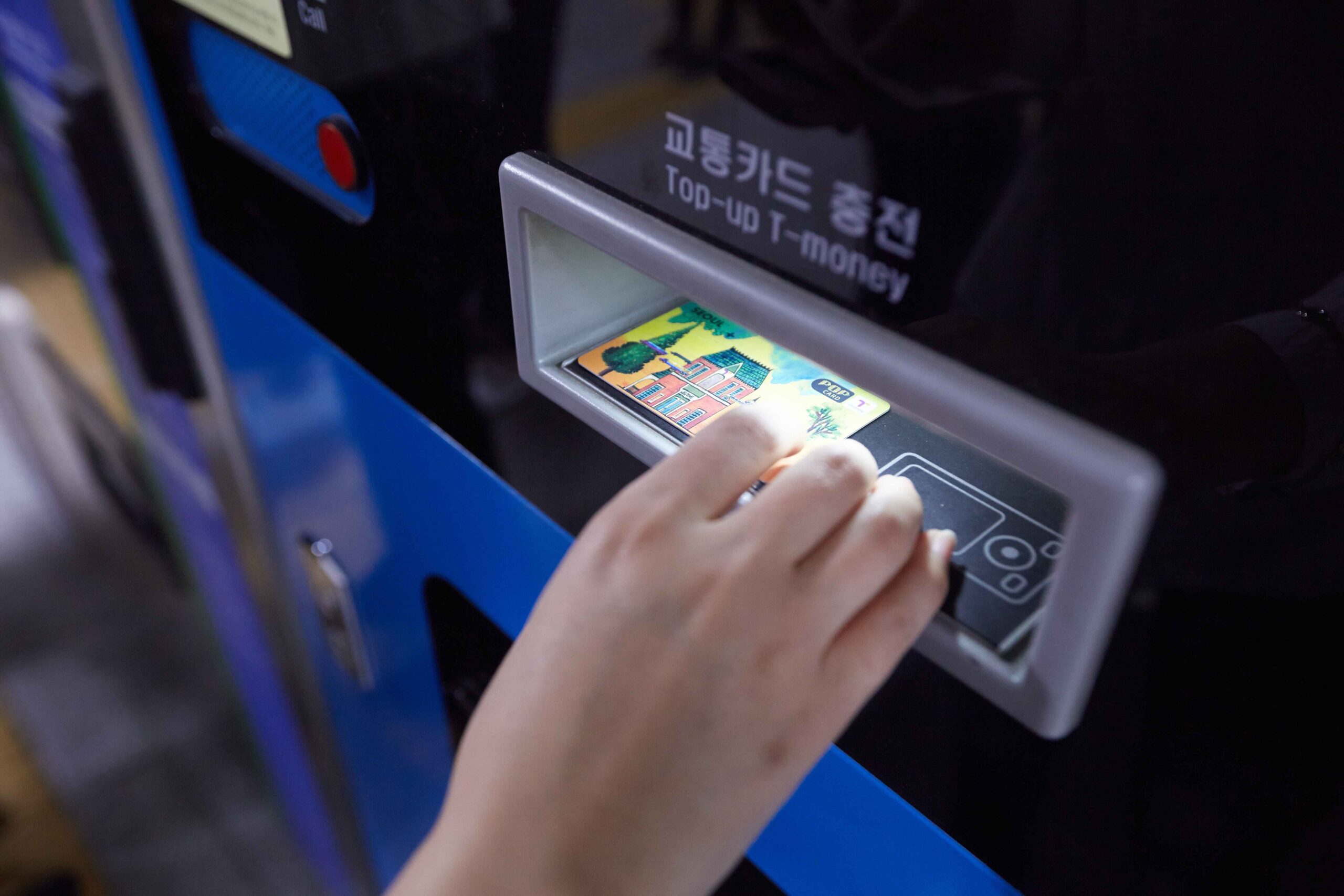
The catch on child fares: the discount only applies if the child taps a card registered as a child card. A regular T-money card bought off the shelf charges the adult rate. If your children are 6 or over and you will be here more than a couple of days, register their cards as child cards at a convenience store or a station office — it more than pays for itself.
Which card to buy for Seoul transport with kids
T-money is the default, and the official T-money site lists every outlet. Buy a card at any convenience store (CU, GS25, 7-Eleven) or station machine, top it up with cash, and tap in and out. It works on the subway, city buses, most intercity buses, taxis and even convenience store purchases. Leftover balance is refundable at convenience stores, minus a small fee.
The Climate Card (기후동행카드) is Seoul’s unlimited pass, and there is a short-term version aimed squarely at visitors:
- 1 day: 5,000 won
- 2 days: 8,000 won
- 3 days: 10,000 won
- 5 days: 15,000 won
- 7 days: 20,000 won
The physical card costs 3,000 won on top, sold at ticket machines inside Seoul Metro (lines 1–8) stations and at convenience stores. The Seoul city site publishes the current rules in English. It covers Seoul subway sections, Seoul city and village buses, and the Ttareungi bike share; it does not cover the Shinbundang Line or GTX.
Is it worth it for a family? Do the arithmetic on adults only. At 1,550 won a ride, an adult needs roughly four rides a day to beat the 5,000-won day pass — achievable on a busy sightseeing day, not on a slow one. For children the maths never works: at 550 won a ride they would need nine rides a day. Buy day passes for the adults if you are moving a lot, and plain T-money for the children.
Strollers on the subway: better than you expect
Here is the single most useful fact for a family visiting Seoul: every station on the Seoul subway now has a step-free route from street to platform. The city completed its “one route per station” lift programme, so you can plan a whole day without carrying a stroller down a flight of stairs.
A few practical notes from doing it:
- Look for the lift signs, not the escalators. Lifts are often at one specific exit, which may not be the exit nearest your destination. Check before you go up.
- The wide gate. Every gate line has one extra-wide gate for strollers, wheelchairs and luggage. Tap as normal and walk through.
- Ride the middle cars. They are less crowded than the ones by the stairs, and it is easier to park a stroller against the end wall.
- Avoid 07:30–09:00 and 18:00–19:30. Rush hour on lines 2, 4 and 9 is genuinely crushing, and a stroller is miserable in it. Sightseeing from 10:00 sidesteps the whole problem.
- Nursing rooms. Larger stations have a family room with a nappy-changing table and a feeding chair; look for the sign with a baby icon on the station map.
Buses: fine, with one adjustment
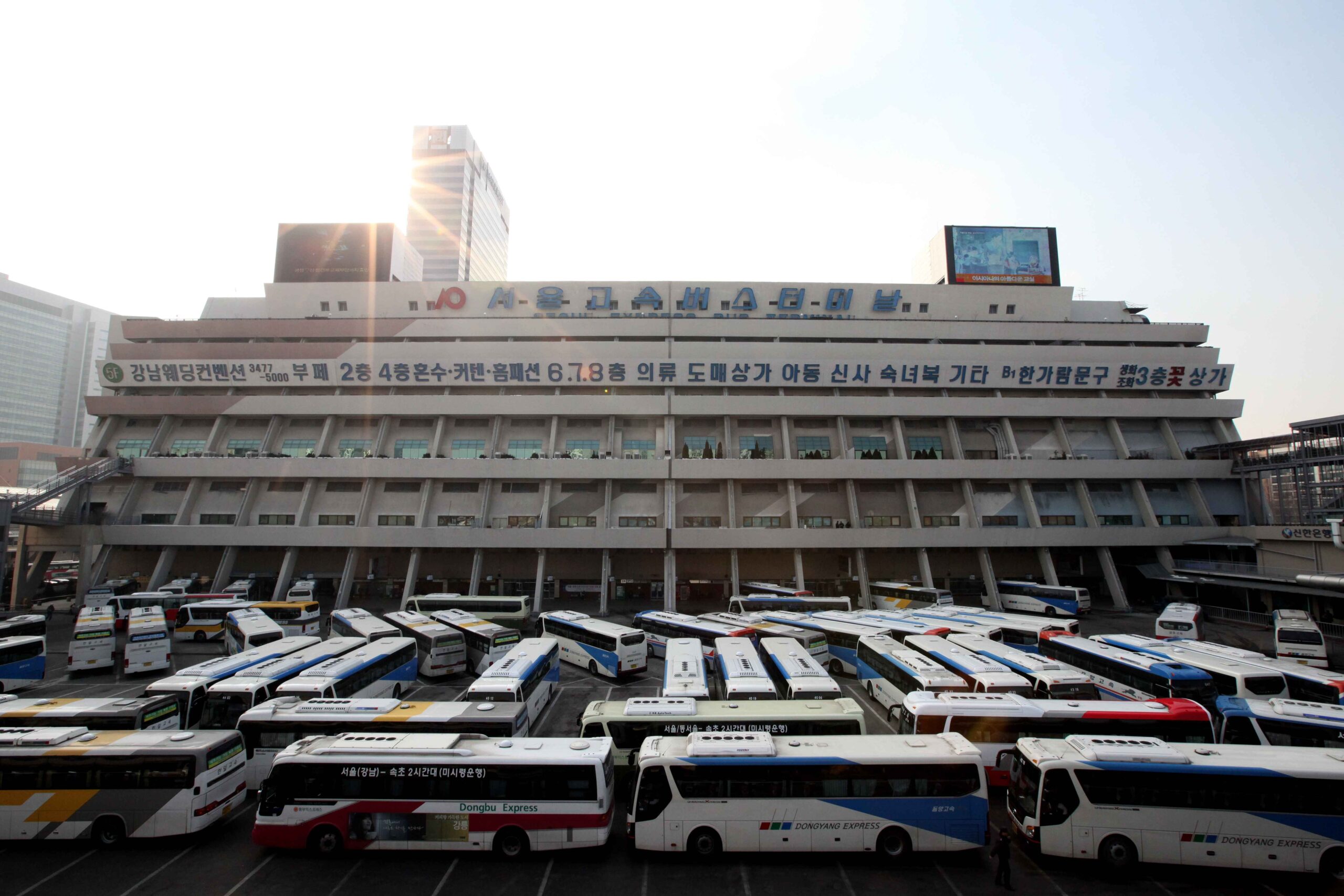
Seoul city buses take the same card and cost the same base fare, and many are low-floor with a ramp. But buses pull away briskly, and drivers do not wait for you to be seated. With a small child, hold on before the bus moves and take the seats near the middle door.
For visiting families, however, the subway usually wins. Signs and announcements come in English, so you are never guessing whether you have missed your stop. In short, Seoul transport with kids works best underground.
Transfers, and the free 30 minutes
Tap out of one service and into the next within 30 minutes and the transfer is free — you pay only the distance difference. You get up to five linked transfers in a journey. This is what makes bus-then-subway combinations painless, and it is why you should always tap out, even on the bus. Forgetting to tap out costs you the transfer discount on the next leg.
Taxis, and when to use one
Regular taxis start at around 4,800 won in Seoul and are cheap by international standards. With children they earn their keep in three situations: coming back from a long day when everyone is finished, moving between two places that need three subway transfers, and rain.
Two things to know. Taxis do not carry child seats, and Korean practice is to hold small children on a lap in the back — legally, taxis are exempt from the child-seat requirement. If that is not acceptable to you, plan around the subway. And use the Kakao T app rather than hailing; it handles the destination in English and avoids the address conversation.
Airport to city with luggage and children
From Incheon, the AREX all-stop train to Seoul Station is the cheapest option and takes about an hour; the express is faster and pricier. Both are step-free with lifts.
If you land with three suitcases, two exhausted children and a stroller, the airport limousine bus to a stop near your hotel is often the saner choice — luggage goes in the hold, you sit down once and get off once. Check whether your accommodation is near a bus stop before you decide.
Seoul transport with kids: what we learned the hard way
- Tap every child’s card separately. Under-6s do not tap; everyone else does, every time, in and out.
- Keep 10,000 won in cash. Some small buses and older machines are unhappy with foreign cards.
- Download a map app that works here. Google Maps has limited transit routing in Korea. Naver Map and KakaoMap both have English interfaces and are what locals actually use.
- Station toilets are inside the gates. Use them before you tap out, not after.
- Lifts get busy. At major stations at peak times there can be a queue for the lift. Build in five minutes.
Planning the rest of your trip? See our 5-day Seoul itinerary for families, the 7 best parks in Seoul for kids, and our travel printables for a packing checklist before you fly.
Fares, pass prices and transfer rules change. Check the Seoul city transport page or the T-money site before you travel.